2026 Best Home Solar Power Storage Systems for Buyers

Choosing among the 2026 Best Home Solar Power Storage Systems requires more than comparing battery size or advertised savings. A reliable Solar Power Storage Home must match your household’s daily demand, solar production, backup priorities, and local electricity rates. A 10-kilowatt-hour battery may support evening lighting and refrigeration, yet struggle with air conditioning or electric vehicle charging. Real homes are less predictable.

Dr. Imre Gyuk, a leading U.S. Department of Energy energy-storage expert, has stated, “Energy storage is the key to enabling renewable energy to be used when and where it is needed.” That principle guides this buyer-focused review. We examine usable capacity, round-trip efficiency, inverter compatibility, warranty coverage, installation requirements, monitoring software, and fire-safety features. We also consider how systems perform during cloudy weather and extended outages.

No battery is perfect. Some offer excellent backup power but cost more upfront. Others provide attractive prices but have limited output or complicated service terms. A careful buyer should question impressive payback claims. Ask for local installation references. Check whether the warranty covers capacity loss, labor, and replacement shipping. Remember the small details: a garage temperature of 5°C, a refrigerator’s startup surge, or a utility’s evening peak rate can change the result. This guide helps homeowners compare practical performance, not just showroom specifications, before investing in a safer and more resilient energy system.
2026 Best Home Solar Power Storage Systems for Buyers

Solar Power Storage Systems: Core Components and Operating Principles

2026 Best Home Solar Power Storage Systems for Buyers

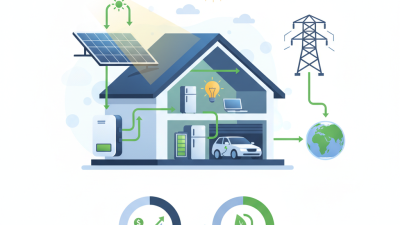
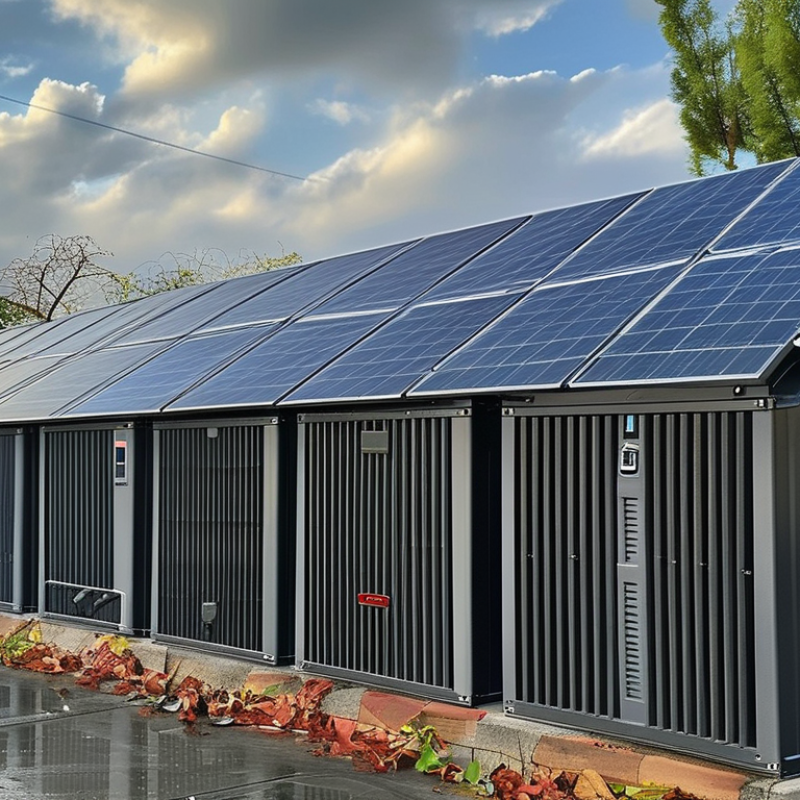
A home solar storage system begins with the photovoltaic array, which converts sunlight into direct current. An inverter then manages conversion between DC and household alternating current. The battery pack stores surplus electricity, while a battery management system monitors voltage, temperature, and cell balance. A home energy management system schedules charging, backup power, and grid export. Metering equipment measures household demand in real time. Small details matter.

During sunny hours, solar electricity serves appliances before charging the battery. After sunset, the inverter draws stored energy and supplies selected circuits. During an outage, automatic transfer equipment isolates the home from the grid. This prevents unsafe back-feeding and creates an islanded electrical system. Lithium-ion batteries commonly achieve roughly 85–95% round-trip efficiency, depending on temperature, power, and operating conditions. The International Energy Agency reported about 42 GW of new utility-scale battery storage in 2023, showing how quickly storage technology is scaling beyond pilot projects (IEA, Batteries and Secure Energy Transitions, 2024).

A practical buyer should compare usable capacity, continuous output, warranty conditions, and cold-weather performance. NREL’s Storage Futures Study emphasizes that storage value depends strongly on load profiles, tariffs, and system design. A larger battery is not always better. Oversizing can leave expensive capacity idle, while undersizing may shorten backup time. Actual household behavior is messy. Evening cooking, electric heating, and cloudy winter days can defeat optimistic estimates. A professional assessment should review hourly consumption, roof shading, ventilation, fire separation, and local electrical requirements before installation.

How to Assess Household Energy Needs and Storage Capacity

Choosing among the 2026 best home solar power storage systems starts with household energy needs, not battery size.

The U.S. Energy Information Administration reported average residential electricity use of about 899 kWh monthly in its 2022 Residential Energy Consumption Survey. That equals roughly 30 kWh daily, but averages can mislead.

A home with gas heating may use far less electricity than one with electric water heating. Review twelve months of utility bills, then list essential loads, including refrigeration, lighting, internet equipment, medical devices, and pumps. Record each appliance’s wattage and operating hours. Do not trust one sunny-day reading.

For example, essential circuits using 8 kWh daily need 12 kWh for 36 hours. Allowing for 90% usable depth and 85% round-trip efficiency requires approximately 15.7 kWh of nominal storage.

These losses matter. NREL’s Annual Technology Baseline emphasizes including efficiency, degradation, and operating conditions in storage modeling.

Solar output also changes with season, shading, roof direction, and weather. A battery sized for summer may disappoint during winter outages. The estimate may still be imperfect.

Tips:

  • Separate essential and flexible loads.
  • Check the inverter’s continuous and surge ratings.
  • Compare usable capacity, not advertised capacity.
  • Include future electric vehicles or heating changes.
  • Recheck the design after one year of measured consumption.

Battery Technologies and Performance Factors for Home Use

In 2026, home energy storage is becoming more practical, but battery chemistry still shapes daily performance. Lithium iron phosphate batteries offer strong thermal stability and long cycle life. They usually suit households seeking frequent charging and discharging. Nickel-manganese-cobalt batteries can provide high energy density, although temperature control and safety design require closer attention.

Usable capacity matters more than the advertised battery size. A 10-kilowatt-hour battery may provide less after reserve limits and conversion losses. Check depth of discharge, round-trip efficiency, continuous output, and surge power. A battery can store enough energy yet fail to start a pump or refrigerator. Short interruptions reveal these weaknesses quickly. Cold garages may reduce charging speed, while hot rooms can accelerate degradation. Ventilation and correct installation remain essential.

Your household load profile should guide the purchase. Measure evening consumption, not only total daily electricity use. Solar generation may peak at noon, while cooking, cooling, and lighting peak later. An expandable system can reduce the risk of buying too much capacity today. My early estimates often ignored standby losses and winter weather. That mistake changed the payback calculation. Warranties deserve careful reading, especially capacity retention, cycle limits, and service conditions. Independent testing data is helpful, but real performance still depends on installation quality, operating temperature, and maintenance. No battery is perfect.

2026 Best Home Solar Power Storage Systems for Buyers - Battery Technologies and Performance Factors for Home Use
Battery Technology Typical Residential Capacity Usable Depth of Discharge Round-Trip Efficiency Typical Cycle Life Expected Service Life Safety and Temperature Characteristics Best-Suited Home Application
Battery Technology Comparison
Lithium Iron Phosphate (LFP) 5–30 kWh per residential system 80–100% 90–98% Approximately 4,000–8,000 cycles 10–20 years, depending on operating conditions Strong thermal stability and lower risk of thermal runaway than nickel-rich lithium chemistries. Performance declines in very cold conditions unless heating is provided. Daily solar self-consumption, backup power, time-of-use energy shifting, and most new home installations.
Lithium Nickel-Manganese-Cobalt Oxide (NMC) 5–20 kWh per residential system 80–95% 90–97% Approximately 2,000–5,000 cycles 8–15 years, depending on temperature and charge rate High energy density and compact size. Requires robust battery-management, monitoring, ventilation, and thermal-protection controls. Homes with limited installation space where compact energy storage is important.
Lead-Acid 5–50 kWh per residential system About 50% for frequent cycling; up to 80% for some deep-cycle designs 70–85% Approximately 500–1,500 cycles 3–7 years in regular cycling applications Lower upfront cost but heavier, larger, and less efficient. Flooded designs require ventilation and maintenance; cold temperatures reduce available capacity. Low-cost standby backup or occasional-use systems where space and weight are not major concerns.
Sodium-Ion 5–20 kWh per residential system Approximately 80–95% 85–95% Roughly 3,000–6,000 cycles for current designs About 10–15 years, depending on product design and usage Uses more abundant raw materials and can offer good low-temperature performance. Residential availability and long-term field data remain more limited than lithium-ion systems. Buyers prioritizing supply-chain diversity, cold-weather operation, and emerging battery technology.
Vanadium Redox Flow 10–100 kWh per residential or small-property system 70–100% 65–85% Approximately 10,000–20,000 cycles 15–25 years with appropriate maintenance Nonflammable electrolyte and very low degradation from cycling. Systems are larger, more complex, and generally less efficient than lithium-based batteries. Large homes, rural properties, frequent deep cycling, and installations where long life and high fire resistance are priorities.
Key Performance Factors for Selecting a Home Storage System
Performance Factor Recommended Buyer Target Why It Matters Practical Evaluation Method
Usable Energy Capacity Begin with 5–15 kWh for essential loads; 15–30 kWh for whole-home backup or high evening consumption. Usable capacity determines how much electricity remains available after the reserve and depth-of-discharge limits are applied. Estimate average overnight consumption, critical-load demand, and the number of backup hours required. Do not size the system from nominal capacity alone.
Continuous Power Rating At least 3–5 kW for essential loads; 8–12 kW or more for larger whole-home loads. Energy capacity measures duration, while continuous power determines which appliances can run at the same time. Add the running wattage of intended simultaneous loads and check whether motors, pumps, refrigerators, and heat pumps require short-duration surge power.
Round-Trip Efficiency Prefer 85% or higher; 90–98% is common for newer lithium-based systems. Higher efficiency reduces solar energy lost during charging and discharging, improving savings from stored electricity. Compare the manufacturer’s measured AC-to-AC efficiency under the expected operating range, not only the cell-level efficiency.
Solar and Inverter Compatibility Confirm DC voltage range, maximum solar input, AC output, and compatibility with existing or new solar inverters. An incompatible inverter can limit charging power, backup operation, or future solar expansion. Check maximum PV input, battery voltage, phase configuration, export-control functions, and whether the system supports grid-forming backup.
Backup Transfer Time Less than 20 milliseconds for sensitive electronics; longer transfer times may be acceptable for basic appliances. Faster transfer helps prevent computers, networking equipment, and control systems from shutting down during an outage. Verify the actual transfer specification for the backup circuits and whether an uninterruptible power supply is needed for sensitive equipment.
Operating Temperature Select a system rated for the local minimum and maximum temperatures; battery heating may be required below freezing. Extreme heat accelerates degradation, while charging many lithium batteries below 0°C can cause permanent damage unless protective controls are used. Review the permitted charge, discharge, and storage temperature ranges and allow space for ventilation or temperature conditioning.
Warranty and Retained Capacity Look for 10 years or a clearly stated cycle-throughput limit, with retained capacity commonly specified at 60–80% at the warranty endpoint. Warranty terms provide a measurable expectation for degradation, operating limits, and replacement eligibility. Compare years, cycles, energy throughput, retained capacity, installation requirements, labor coverage, and warranty-transfer conditions.
Safety Certification and Protection Use equipment installed according to applicable electrical, fire, and building codes and certified for the target market. Battery-management systems, over-current protection, thermal monitoring, and enclosure design reduce electrical and thermal hazards. Request certification documentation, installation clearances, emergency-shutdown details, and the installer’s code-compliance plan.
Scalability and Monitoring Choose modular systems that can be expanded without replacing the inverter or control platform. Future electricity demand, electric vehicles, heat pumps, or additional solar generation may require more storage or power capacity. Check maximum battery modules, communication protocols, mobile monitoring, historical data access, and software-update support.
Installation Location Use a dry, well-ventilated, code-compliant location protected from flooding, direct sunlight, and unauthorized access. Location affects safety, usable capacity, maintenance access, noise, temperature control, and installation cost. Obtain a site assessment covering wall strength, clearances, ventilation, flood risk, service access, and local permitting requirements.
Data note: Values shown are typical industry ranges for residential systems and can vary by cell design, inverter configuration, ambient temperature, charge rate, maintenance, installation quality, and operating profile. Actual buyer comparisons should use independently verified system-level specifications rather than cell-level claims alone.

Comparing Solar Storage Systems by Cost, Safety, and Efficiency

2026 Best Home Solar Power Storage Systems for Buyers

Comparing Solar Storage Systems by Cost, Safety, and Efficiency

Comparing Solar Storage Systems by Cost, Safety, and Efficiency

A practical comparison starts with usable capacity, not the advertised battery size. A 10-kilowatt-hour system may provide less after reserve limits and conversion losses. Review the usable capacity, cycle rating, warranty terms, and installation costs together. A lower purchase price can become expensive when extra electrical work is required. Ask for a written estimate that includes permits, wiring, monitoring, and labor. Details matter.

Safety deserves equal attention. Look for lithium-based systems with thermal monitoring, cell balancing, emergency shutdown controls, and independent safety testing. Installers should explain clearance requirements and place the unit away from bedrooms or heat sources. A clean garage installation should include visible labels and accessible service space. Do not accept vague answers.

Efficiency affects daily savings. Compare round-trip efficiency, standby consumption, and performance during partial loads. A system with slightly higher efficiency may deliver more useful energy during cloudy weeks. However, bigger is not always better. Oversizing can increase costs without improving household savings. Analyze evening demand, backup priorities, and seasonal production before choosing capacity.

Real homes rarely match sales spreadsheets. My own evaluation would include one week of hourly electricity use and a review of outage needs. That process can reveal uncomfortable trade-offs. Backup power may require a larger inverter, while maximum savings may need a different operating strategy. Prices and local installation conditions also change, so estimates should be checked carefully before signing.

Installation, Maintenance, and Smart Energy Management Considerations

In 2026, the best home solar storage system should fit your daily load, roof output, and local grid rules. A professional installer should inspect the service panel, cable routes, ventilation, and battery location before quoting work. Indoor units need clearances. Outdoor units need weather protection. Measure twice.

Ask for a written design showing usable capacity, backup circuits, expected charging time, and emergency shutdown access. A battery that looks large on paper may provide less energy after reserve settings and conversion losses. I have seen homeowners oversize systems because they focused on advertised capacity. Their unused storage increased costs without improving evening comfort. That choice deserves review.

Maintenance is usually simple, but it is not automatic. Keep vents clear, check warning lights monthly, and arrange an annual electrical inspection. Record unusual noise, heat, or sudden capacity changes. Keep records. Smart energy software can charge during low-rate periods, reserve power for outages, and reduce exports when prices change. Set conservative backup limits for refrigerators, medical equipment, or network devices. Review those settings after adding an induction cooker or heat pump. Remote alerts are useful, yet they depend on internet access. Test local controls before an outage. A polished dashboard cannot replace safe wiring, accurate load data, and a technician who explains the system clearly.