How to Choose Domestic Solar Battery Systems in 2026?

Choosing among Domestic Solar Battery Systems in 2026 will require more than comparing advertised capacity. A 10 kWh battery may deliver less usable energy after reserve settings, conversion losses, and temperature effects. The right system depends on household demand, solar output, electricity tariffs, backup expectations, and local installation conditions.

Industry evidence supports careful evaluation. The International Energy Agency’s Batteries and Secure Energy Transitions report identifies battery storage as essential for integrating growing renewable generation. Its analysis also shows that storage deployment must expand sharply this decade to support reliable, flexible power systems. SolarPower Europe’s European Market Outlook 2024–2028 reports continued growth in residential solar, while highlighting changing incentives and grid constraints. These trends matter at home. A battery is not simply a larger solar panel.

Look beyond the brochure.

This guide examines usable capacity, round-trip efficiency, cycle life, degradation warranties, inverter compatibility, and emergency backup performance. It also considers lithium iron phosphate chemistry, thermal management, monitoring software, and the installer’s certification record. Independent testing and manufacturer documentation deserve more trust than aggressive sales claims. Check the warranty carefully. It may cover capacity, but not every component or operating condition.

A spreadsheet can still mislead. Electricity prices change, cloudy winters reduce charging, and backup circuits may exclude heating or cooking appliances. The best Domestic Solar Battery Systems choice is therefore not always the largest or cheapest model. It should match measured household behavior, realistic solar generation, and verified safety requirements. This article offers a practical framework, while acknowledging that professional site assessment remains necessary before purchase.
How to Choose Domestic Solar Battery Systems in 2026?

Define Your Home’s Energy Needs and Solar Battery Goals

Choosing a domestic solar battery starts with your household’s energy needs, not a battery’s advertised capacity. Review twelve months of electricity bills and note daily usage, evening demand, and seasonal changes. A smart meter can reveal when consumption peaks.

Walk through your home during a typical evening. A refrigerator, internet router, lights, and heating may consume more power than expected. Record their wattage and estimate how long each runs. My first estimate ignored standby devices, so the result was too low. Small loads add up.

Decide what the battery must achieve. You may want to use more solar power after sunset, reduce peak-grid purchases, or maintain essential circuits during outages. These goals require different usable capacities and power ratings. For example, a five-hour backup target needs more planning than brief emergency coverage. Include cloudy winter days, battery reserve settings, and future equipment such as an electric vehicle. Do not size the system only for your best summer production.

Ask a qualified installer for measured calculations, clear efficiency figures, safety documentation, warranty conditions, and maintenance requirements. Confirm whether the system can support your selected appliances simultaneously. A battery that stores enough energy may still deliver too little power for a pump or induction cooker. Leave room for doubt. Your household habits may change. Review the estimate after observing real consumption for several weeks.

How to Choose a Domestic Solar Battery System in 2026

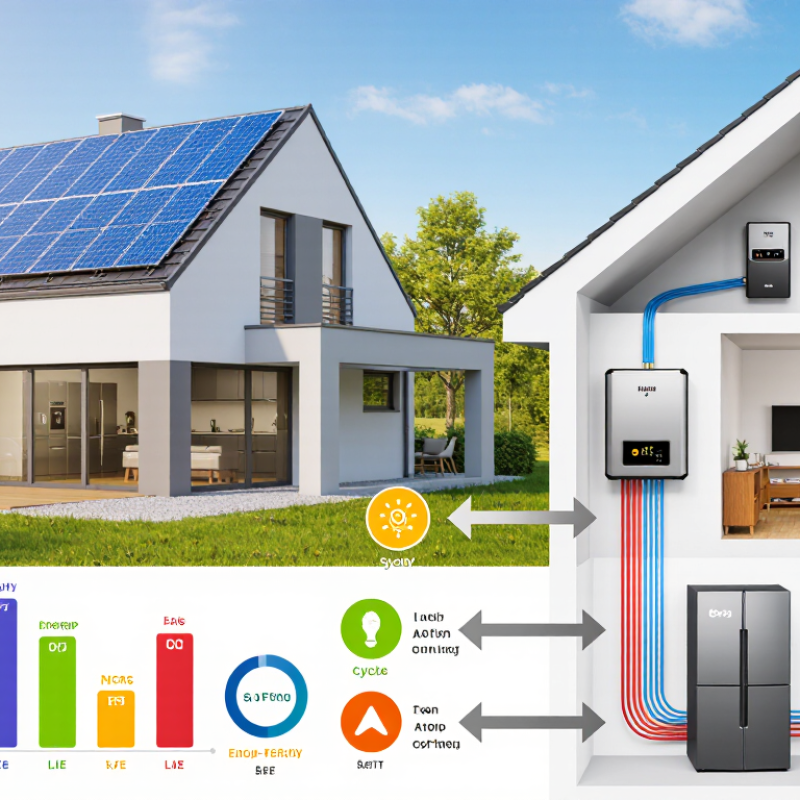
Define your home's energy needs first. This planning chart compares daily electricity use with the usable battery capacity needed to cover approximately 50% of daily consumption, which is a practical starting point for evening self-consumption and short backup periods.

Planning model: usable battery capacity is estimated at half of daily household electricity demand. Actual sizing depends on solar production, evening load, backup duration, battery depth of discharge, inverter limits, weather, and local electricity tariffs. Values are shown in kWh.

Compare Battery Types, Capacity, Power, and Usable Storage

How to Choose Domestic Solar Battery Systems in 2026?

Battery chemistry affects safety, lifespan, weight, and usable storage. Lithium iron phosphate cells suit many homes because they tolerate frequent cycling and avoid cobalt-based chemistry. Nickel-manganese-cobalt systems can offer higher energy density, but temperature control matters more. Lead-acid batteries cost less initially, yet their practical depth of discharge and shorter cycle life can reduce value.

The International Energy Agency reported about 42 GW of new battery storage capacity in 2023, lifting global power-sector capacity near 85 GW. Storage is no longer experimental.

Capacity Capacity, measured in kilowatt-hours, tells you how long the battery can store energy.

Power Power, measured in kilowatts, shows how many appliances it can run simultaneously.

A 10 kWh battery with 5 kW output may support evening lighting, refrigeration, and networking equipment. It may not start a large heat pump. Check continuous and peak power ratings.

Usable storage needs careful calculation.

A 10 kWh unit with 90% depth of discharge provides roughly 9 kWh before conversion losses. With 90% round-trip efficiency, delivered energy may approach 8.1 kWh. Real results vary with temperature, age, and standby consumption.

NREL’s Annual Technology Baseline highlights continuing reductions in battery costs, but installation, controls, and electrical upgrades remain significant.

My practical mistake was sizing only for daily consumption. Winter solar production and backup priorities changed the answer. Leave some margin. Oversizing is also imperfect.

Assess Compatibility with Solar Panels, Inverters, and the Grid

How to Choose Domestic Solar Battery Systems in 2026?

Compatibility starts with the solar panels. Check their voltage range, current limits, and expected winter output. A battery must accept the panels’ operating range without clipping production. The National Renewable Energy Laboratory notes that temperature can significantly change photovoltaic voltage. Cold mornings may create higher voltages than installers expect. Small details matter.

The inverter is equally important. Confirm whether it supports AC-coupled or DC-coupled storage. Check continuous power, surge capacity, communication protocols, and backup switching time. A battery may store enough energy but still fail to start a pump or refrigerator. The International Energy Agency’s Batteries and Secure Energy Transitions report says global storage capacity must increase sixfold to about 1,500 GW by 2030. That growth increases choice, but not automatic compatibility.

Grid connection rules can decide the installation. Ask whether export limits, anti-islanding protection, and emergency shutdown controls meet local requirements. Request written confirmation from the installer and utility. Do not rely only on a mobile application or sales estimate. A system producing 10 kilowatt-hours daily may deliver less during cloudy weeks. I have seen planning models assume perfect sunshine. That is not realistic. Review the home’s main-panel rating, phase configuration, and meter type before ordering. The system should also coordinate with time-of-use tariffs and permitted backup operation. A professional design should show these assumptions clearly. Many homeowners skip this step. They regret it later.

Evaluate Safety, Warranty, Lifespan, and Installation Requirements

How to Choose Domestic Solar Battery Systems in 2026?

Choosing a domestic solar battery requires more than comparing storage capacity. Safety should lead every discussion. Look for verified protection against overheating, overcharging, short circuits, and moisture. A cool, dry, well-ventilated location can reduce avoidable stress on the battery. Ask whether the system includes monitoring, emergency shutdown, and clear fault alerts. During a home assessment, installers should inspect wall strength, airflow, cable routes, and nearby heat sources. Small details matter. A battery beside a boiler may create unnecessary risk.

Warranty wording deserves careful reading. Check the warranty period, usable capacity, cycle limits, and replacement conditions. A ten-year promise may apply only under specific temperature and charging rules. Lifespan also depends on daily depth of discharge, household demand, and maintenance. Real usage rarely matches laboratory figures. That assumption is risky. Ask for performance data from comparable residential conditions, not only ideal testing.

Installation quality affects safety and long-term value. Confirm whether electrical upgrades, permits, ventilation, or fire-resistant mounting are required. A qualified installer should explain isolation procedures and provide commissioning records. Cable paths should stay protected from sharp edges, water, and accidental impact. Leave accessible space for inspection and future servicing. I would also request a written handover guide, including warning lights and shutdown steps. Many homeowners overlook this part. The cheapest installation can become expensive when documentation, access, or maintenance is missing.

Calculate Costs, Savings, Incentives, and Long-Term Value

Choosing a domestic solar battery in 2026 requires more than comparing its advertised capacity. Calculate usable kilowatt-hours, round-trip efficiency, degradation, installation, finance, and future replacement costs. A 10 kWh battery may deliver less than 10 kWh after reserve settings and conversion losses.

Start with your hourly electricity profile. If evening consumption is 6 kWh, an oversized battery may add cost without adding savings. The International Energy Agency reported that global battery storage additions in the power sector reached about 42 GW in 2023, nearly doubling from the previous year. This signals stronger supply, but not guaranteed household savings. Use local tariffs and realistic cycling assumptions. My rough model is imperfect: annual savings equal discharged energy multiplied by tariff differences, minus standby losses and maintenance. Include backup value separately. A battery that prevents four hours of food spoilage may be valuable, even when its financial payback looks weak. Check the Lazard Levelized Cost of Storage analysis for broader cost trends, but remember that household installation prices differ from utility projects.

Tips: Request three itemized quotes. Ask for usable capacity, warranty exclusions, cycle limits, and replacement pricing. Confirm whether incentives apply to storage alone or only with solar. Government guidance and local tax rules should be checked before signing. Model conservative savings, such as 80% of the installer’s estimate. Also test a no-battery scenario. Sometimes efficiency upgrades, timed appliance use, or a smaller system produce better long-term value.

How to Choose Domestic Solar Battery Systems in 2026? - Calculate Costs, Savings, Incentives, and Long-Term Value

Illustrative U.S. residential planning model using 2026 dollars. Actual results depend on electricity tariffs, installation conditions, system controls, household load, and local incentives.
Evaluation Metric Small System
5 kWh
Medium System
10 kWh
Large System
15 kWh
How to Use This Metric
Battery Capacity and Operating Characteristics
Nominal battery capacity 5 kWh 10 kWh 15 kWh Match capacity with evening consumption and backup requirements.
Assumed usable capacity 4.5 kWh 9.0 kWh 13.5 kWh Calculated at 90% usable depth of discharge.
Estimated annual full-equivalent cycles 300 cycles 300 cycles 300 cycles Represents regular daily cycling without assuming continuous maximum use.
Estimated annual energy throughput 1,350 kWh 2,700 kWh 4,050 kWh Usable capacity multiplied by estimated annual cycles.
Typical round-trip efficiency assumption 85%–92% 85%–92% 85%–92% Higher efficiency improves the value of solar shifting and time-of-use charging.
Expected service-life planning range 10–15 years 10–15 years 10–15 years Review the usable-capacity retention terms and cycling limits before purchase.
Costs and Incentive Scenario
Estimated installed cost before incentives $7,500 $13,000 $18,500 Planning range for battery, inverter integration, labor, permits, and balance-of-system work.
Estimated installed cost per usable kWh $1,667/kWh $1,444/kWh $1,370/kWh Larger systems often have a lower cost per usable kWh because fixed installation costs are spread over more capacity.
Illustrative incentive scenario 30% of eligible cost 30% of eligible cost 30% of eligible cost Confirm federal, state, utility, and local eligibility rules for the installation year.
Illustrative incentive value $2,250 $3,900 $5,550 Shown only as a 30% scenario; the actual credit or rebate may differ or be unavailable.
Estimated net cost after illustrative incentive $5,250 $9,100 $12,950 Pre-incentive cost minus the illustrative incentive value.
Savings and Long-Term Value
Estimated annual bill savings range $240–$475 $485–$945 $730–$1,420 Illustrative range based on approximately $0.18–$0.35 of avoided electricity value per discharged kWh.
Midpoint annual bill savings used for calculations $358 $715 $1,075 Useful for comparing systems before applying household-specific tariffs.
Simple payback before incentives 20.9 years 18.2 years 17.2 years Installed cost divided by midpoint annual bill savings; backup value is not included.
Simple payback after illustrative incentive 14.7 years 12.7 years 12.0 years Net cost after the illustrative incentive divided by midpoint annual bill savings.
15-year cumulative savings, before degradation $5,370 $10,725 $16,125 Midpoint annual savings multiplied by 15 years; actual savings may vary.
15-year savings with 2% annual degradation $4,650 $9,270 $13,930 Illustrative model assuming annual savings decline by 2% as usable capacity decreases.
Estimated 15-year net value after illustrative incentive −$600 $170 $980 15-year degraded savings minus net installed cost; excludes financing, maintenance, outage value, and replacement costs.
Selection Guidance
Best suited for Essential-load backup and modest solar shifting Typical homes with evening loads and time-of-use pricing High electricity use, larger solar arrays, or extended backup needs Choose based on load profile and backup priorities rather than capacity alone.
Primary economic advantage Lower upfront investment Balanced cost, capacity, and flexibility More energy shifting and longer backup duration Economic value improves when peak and off-peak prices differ substantially.
Important limitation May not support large loads for long periods May require load management during extended outages Higher initial cost and may be underused in low-consumption homes Check continuous power rating, surge rating, and critical-load compatibility.
Calculation notes: Annual bill savings are illustrative and are based on battery energy throughput multiplied by an avoided-energy value of approximately $0.18–$0.35/kWh. The model assumes 300 equivalent full cycles per year, 90% usable depth of discharge, and 2% annual degradation for the long-term estimate. Incentives vary by jurisdiction, tax status, installation date, and technology eligibility; verify current 2026 rules with the relevant tax authority, utility, and permitting office. Backup-power resilience and outage avoidance can provide additional value that is not included in the financial calculations.