How to Choose the Right Electric Car Charging Pile for Your Needs?
As electric vehicles (EVs) gain popularity, selecting the right Electric Car Charging Pile becomes crucial. According to a recent report by the International Energy Agency, global EV sales reached 6.6 million in 2021 alone, an increase of 108% over the previous year. With this growth comes the need for accessible and efficient charging solutions. Choosing the appropriate charging pile can significantly impact the convenience and feasibility of owning an electric vehicle.
The market is flooded with options, making the decision daunting for many consumers. Factors such as charging speed, installation requirements, and compatibility must be considered. For instance, Level 2 chargers offer faster charging times, making them suitable for home use. However, the installation may require electrical upgrades. A comprehensive understanding of these aspects is essential for ensuring that the Electric Car Charging Pile aligns with individual needs.
Moreover, not every charging solution will fit every lifestyle or budget. Some piles require significant investment and ongoing maintenance. A thorough analysis of your driving habits, local grid capacity, and available incentives can aid in making an informed choice. Reflecting on these considerations will help navigate the complexities of electric vehicle charging in today's evolving market.
Understanding Your Electric Vehicle Charging Needs
Choosing the right electric vehicle (EV) charging solution demands a clear understanding of your specific charging needs. According to the International Energy Agency (IEA), global electric car sales grew by 108% in 2021, indicating a rising interest in EVs. This growth necessitates efficient charging infrastructure. Residential charging and public charging options have become crucial for EV owners.
A homeowner might need a Level 2 charging station, which delivers up to 240 volts. This setup can fully charge most EVs in about 4 to 8 hours. Studies show that 80% of EV owners charge their vehicles at home, emphasizing the importance of having a reliable home charging station. Conversely, those who drive frequently for work may require fast charging stations. Public infrastructure often uses DC fast chargers, which significantly reduce charging time to as low as 30 minutes.
Assessing daily driving patterns, battery capacity, and available charging stations in your area is vital. Research indicates that about 40% of EV owners experience "range anxiety," stemming from an unfamiliar or inadequate charging network. While seeking convenience, it's also important to consider installation costs and potential electrical upgrades. Perfect solutions may not exist, but understanding your unique requirements is essential for a satisfactory EV charging experience.
Electric Vehicle Charging Pile Options
This chart illustrates the estimated charging time for different types of electric car charging piles. Level 1 charging takes the longest at approximately 12 hours, making it suitable for home use with basic outlets. Level 2 charging significantly reduces the time to around 4 hours and is often used in residential and commercial installations. DC Fast Charging and Tesla Superchargers provide rapid charging options, requiring only around 1 hour to charge the vehicle effectively, making them ideal for long-distance travel.
Types of Electric Car Charging Piles: Level 1, Level 2, and DC Fast Chargers
When considering the right electric car charging pile, it's essential to understand the different types available. Level 1 chargers are the most basic option. They typically use a standard household outlet. This method is convenient but slow, often requiring several hours to fully charge a vehicle. If you drive less frequently, this may suffice.
Level 2 chargers deliver more power. They are commonly found in public charging stations and can fully charge most electric vehicles in a few hours. Installation may require a dedicated circuit. This investment can enhance your charging experience significantly. However, it's worth reflecting on the increased installation costs.
DC Fast Chargers are the quickest option. They can provide an 80% charge in about 30 minutes. While this option is exceptionally convenient for long journeys, they are generally more expensive and not needed for everyone. Not all locations have DC Fast Chargers, which limits their accessibility. Carefully assess your charging routine to determine which type aligns best with your needs.
Factors to Consider When Choosing a Charging Pile: Home vs. Public Use
When selecting an electric car charging pile, it's vital to consider your charging needs. Home-use charging piles are typically less expensive and simpler to install. They often support Level 2 charging, delivering around 7.2 kW to 19.2 kW. A report from the International Energy Agency indicates that home charging accounts for about 80% of electric vehicle charging sessions. This is appealing for users who drive mostly short distances.
For public use, charging stations can vary significantly. Fast chargers, capable of offering 50 kW or more, are crucial for long trips. Research shows that 30% of electric vehicle owners use public charging regularly. However, public chargers can come with higher costs and limited availability. It’s essential to consider your region's infrastructure. Areas with less support may lead to longer wait times or range anxiety.
While one might think all charging piles are similar, there are differences in features and compatibility. For instance, some might not be equipped for certain EV models. As charging technology evolves, staying informed on advancements is necessary. Understanding these factors helps ensure that you choose the right option for your lifestyle and driving habits.
Evaluating Charging Speed and Power Output Requirements
When choosing an electric car charging pile, evaluating charging speed and power output is essential. Charging speed directly impacts your daily routine. If you often rely on your vehicle for short trips, a standard level 2 charger might suffice. However, if long travels are common, consider faster options. A DC fast charger can significantly reduce downtime.
For power output, it’s key to match your vehicle's requirements. Different electric cars support varying amperage levels. Generally, higher power output equals faster charging. Understanding your car's specifications will enhance your charging experience. Sometimes, users underestimate their needs, leading to frustrating wait times.
Tips: Always check your electrical system compatibility. A higher power charger might require upgrades. It’s worth it for efficiency. Additionally, think about future vehicle choices. If you plan to upgrade, choose a charging pile that accommodates that potential. Flexibility in your charging station can save time and effort down the road.
How to Choose the Right Electric Car Charging Pile for Your Needs?
| Charging Type |
Power Output (kW) |
Charging Speed (Miles per Hour) |
Best Use Case |
| Level 1 Charging |
1.4 - 2.4 kW |
4-5 Miles |
Home Use |
| Level 2 Charging |
3.7 - 22 kW |
10-60 Miles |
Public Charging Stations |
| DC Fast Charging |
50 - 350 kW |
100-400 Miles |
Highway Stops |
| Wireless Charging |
3.6 - 7.7 kW |
5-15 Miles |
Parking Lots |
Installation and Cost Considerations for Electric Car Charging Piles
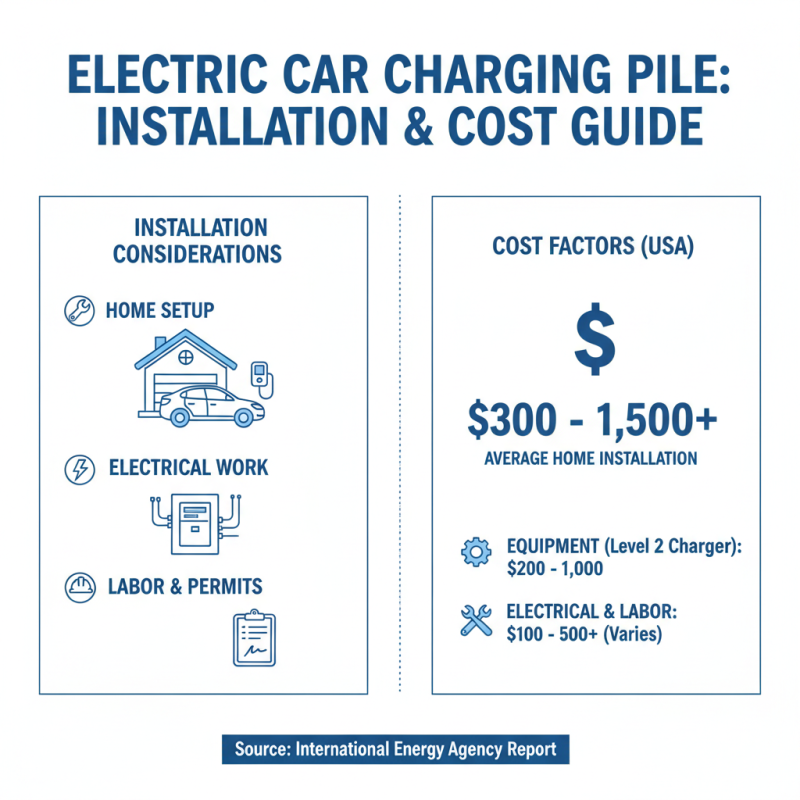
When considering the installation of an electric car charging pile, several factors come into play. Cost is a primary concern. According to a report by the International Energy Agency, the average installation cost for a home charging station can range from $300 to $1,500. This varies based on installation complexity and local labor rates.
It's essential to assess your specific needs. Level 2 chargers are more common for home use. They offer faster charging times and can recharge a vehicle in about four to six hours. However, they require a dedicated circuit, which adds to installation costs. On the contrary, Level 1 chargers are less expensive but significantly slower, taking up to 20 hours for a full charge.
Choosing the right location for your charging pile is also critical. If your garage lacks easy access to electrical outlets, costs can escalate. Upgrades may be necessary to accommodate a charging station. Planning ahead helps manage these expenses. Ultimately, understanding your charging needs enables more informed decisions about installation and overall costs.