How to Choose Solar Inverters and Battery Storage for Your Needs?
Choosing the right Solar Inverters and Battery Storage is crucial for optimizing solar energy use. With the solar market rapidly expanding, understanding the available options becomes essential. According to the Solar Energy Industries Association, U.S. solar capacity hit over 100 gigawatts in 2022, marking a significant milestone.
Industry expert Dr. Ellen Smith, a leading figure in renewable energy technology, emphasizes this, stating, "Selecting the right Solar Inverters and Battery Storage can significantly impact efficiency and savings." This highlights the importance of informed decision-making in this evolving landscape.
While many homeowners and businesses may focus solely on solar panel efficiency, neglecting inverters and battery storage can lead to inefficiencies. An ideal system balances costs, performance, and specific energy needs. Some users may find themselves overwhelmed by the choices available. Engaging with knowledgeable consultants and conducting thorough research can help bridge this gap, ensuring a sustainable approach to energy management.
Understanding Solar Inverters: Types and Functions
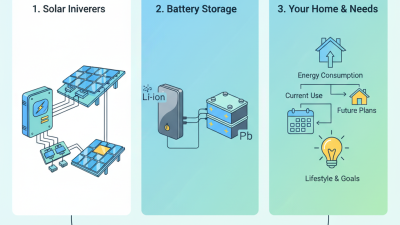
When selecting a solar inverter, understanding the types and their functions is crucial. Most solar inverters fall into three categories: string inverters, microinverters, and power optimizers. Each serves a specific purpose based on your solar panel setup.
String inverters are common for residential setups. They connect a series of panels together. If one panel faces shading, it can affect the entire string. This downside can be significant in some installations.
Microinverters, on the other hand, are attached to each panel. They allow for individual performance monitoring. This feature can enhance energy output, particularly if shading is a concern. However, their higher cost may not suit all budgets.
Power optimizers combine features of both, boosting energy production while still using a string inverter. Yet, they require careful installation and often more maintenance attention.
The choice of inverter impacts efficiency and savings. Many users overlook the inverter as a key component. Evaluating installation conditions, budget constraints, and future energy needs is essential. The decision can lead to reflections on energy goals and sustainability.
Understanding the inverter's role helps align solar installations with long-term energy plans.
Evaluating Battery Storage Options for Solar Energy
When evaluating battery storage options for solar energy, it's crucial to consider capacity and lifespan. The capacity of a battery dictates how much energy it can store. Larger homes may need bigger batteries. Lifespan is equally important. Most batteries last between 5 to 15 years. Choosing the right battery involves balancing cost and longevity.
Tips: Always check the warranty terms. A longer warranty often indicates better quality. Depth of discharge is another factor. This tells you how much of the battery's capacity you can safely use.
Don’t overlook installation costs either. Some systems require special setups. Ensure that you understand all the components needed for integration. Research different battery types, such as lithium-ion or lead-acid. Each has its pros and cons.
Remember, there’s no one-size-fits-all solution. It’s essential to evaluate your energy needs and future plans. This might require adjustments later. Asking for expert advice can also be beneficial. Their insights can help you align your choices with your unique energy requirements.
Assessing Your Energy Needs and Consumption Patterns
Understanding your energy needs is crucial when choosing solar inverters and battery storage. Start by assessing your daily energy consumption. Look at your electricity bills to see your average usage over a month. Make a list of your major energy-using appliances and their wattage. This helps in calculating your total energy load.
Consider your lifestyle too. Do you work from home? Use energy-hungry devices frequently? Your habits will impact how much energy you need. You might find that your weekend usage differs from weekdays. Not every household has the same energy profile. Reflect on seasonal changes; your air conditioning or heating may spike energy use during certain months.
Once you have a clear picture, you'll be in a better position to select the correct inverter and battery system. Think about whether you require backup power during outages. Evaluate how much storage you need to go off-grid or simply reduce your electricity costs. The balance between energy production and storage capacity is key. It’s common to misjudge these factors, leading to either waste or insufficient power. Take time to refine your understanding and ensure your choices align with your specific needs.
Factors to Consider When Selecting Solar Inverters and Batteries
When selecting solar inverters and battery storage, consider several crucial factors. The capacity of the inverter must match your energy needs. If you have high energy consumption, opt for a larger inverter. However, oversized inverters can lead to inefficiencies. It’s a fine balance that requires careful calculation.
The type of battery is also essential. Lithium-ion batteries are more efficient but can be expensive. Lead-acid batteries are cheaper but have a shorter lifespan and lower efficiency. Assess your budget and energy requirements. Think about your usage patterns too. If you primarily consume energy during the day, a specific configuration may be more beneficial.
Another aspect worth reflecting on is installation and maintenance. Inverters require proper installation for optimal performance. Some inverters need frequent monitoring and upkeep. This can increase long-term costs. Understanding the technical requirements is vital. Ask questions during the selection process. Your knowledge will lead to a better decision.
Integrating Solar Inverters and Battery Storage into Your Energy System
Integrating solar inverters and battery storage is key to a reliable energy system. According to the Solar Energy Industries Association (SEIA), the U.S. solar market grew by 20% in 2022. This growth highlights the need for efficient inverters and battery storage solutions.
Inverters convert DC electricity from solar panels into AC, ensuring compatibility with your home appliances.
Battery storage systems enable users to store excess energy for later use. A National Renewable Energy Laboratory report states that adding storage can enhance self-consumption rates by up to 40%. This is crucial for areas with limited sunlight or during peak demand times. However, not all systems are created equal. Factors such as energy capacity, discharge rate, and overall efficiency can vary significantly.
Choosing the right combination involves assessing your specific energy needs. Analyze your usage patterns before making a decision. Take into account your geographic location and local energy costs. Sometimes, pre-configured systems may not align perfectly with personal requirements. Conducting your own research ensures a more tailored approach to your energy independence.