How to Choose the Best Home Battery Power System for Your Needs?
As the demand for renewable energy grows, many homeowners are considering a Home Battery Power System. In 2022, the home battery market experienced a remarkable 25% growth, as reported by BloombergNEF. This trend highlights the increasing interest in energy independence and sustainability. Homeowners are now looking for systems that not only provide backup power but also integrate seamlessly with solar panels.
Choosing the right Home Battery Power System can be challenging. With various brands and technologies available, understanding the differences is crucial. An accurate assessment of energy needs is essential. According to the National Renewable Energy Laboratory, the average household consumes about 900 kWh per month. Selecting a system that meets or exceeds these requirements is fundamental to ensure reliability during outages.
However, this decision is not without its complexities. Factors such as battery lifespan, efficiency, and warranty terms require careful consideration. Some systems may promise high performance, but real-world results can vary. It's vital to compare product reviews and seek knowledgeable advice. Making an informed choice can lead to enhanced energy management and cost savings in the long run.
Factors to Consider When Selecting a Home Battery Power System
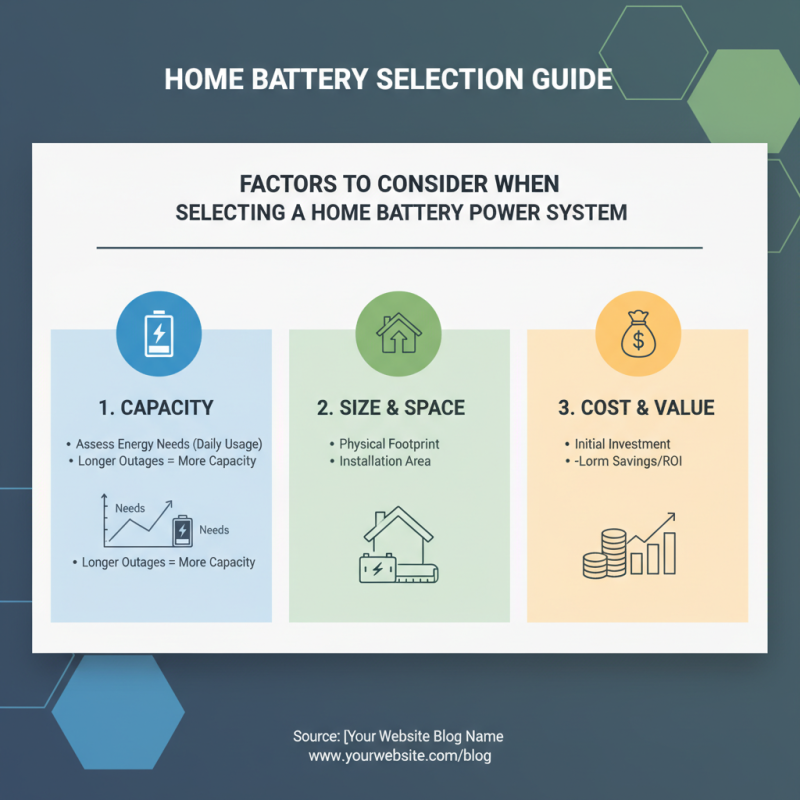
Choosing a home battery power system requires careful consideration. Several factors can influence the decision-making process. Capacity is crucial. Assess your energy needs. Think about daily usage. A larger capacity provides backup for longer outages. However, larger systems may require more space.
Efficiency also matters. Look for systems with high round-trip efficiency. This measure indicates how much energy is used to store and retrieve power. A more efficient system saves money over time. Battery lifespan is another key factor. Check warranty details to understand longevity. Some batteries perform well initially but degrade quickly.
Tips: Always analyze your home’s energy consumption patterns. You can gather insights from past utility bills. Consider future needs as well. If you plan to add solar panels later, ensure compatibility with your battery system. Research installation requirements too; some systems may need professional setup. Your local climate can affect battery performance. Cold or excessively hot conditions may reduce efficiency. Reflect on these aspects as you choose the right system for your situation.
Understanding Battery Types: Lithium-ion vs. Lead-acid
When evaluating battery types for home power systems, lithium-ion and lead-acid are the primary contenders. Lithium-ion batteries have gained popularity due to their higher energy density. They can store more energy in a smaller space. According to the U.S. Department of Energy, lithium-ion batteries can achieve up to 90% round-trip efficiency. This means less energy is lost when charging and discharging.
On the other hand, lead-acid batteries are more traditional. They are heavier and bulkier, making them harder to install in certain spaces. Their efficiency is lower, typically around 70-80%. Lead-acid batteries also require regular maintenance, which can add to long-term costs. A report by the National Renewable Energy Laboratory indicates that lead-acid batteries generally have a shorter lifespan, averaging about 3-5 years. In contrast, lithium-ion batteries can last 10-15 years depending on usage.
It's essential to consider usage patterns when choosing between these battery types. Lithium-ion batteries might seem like the better choice initially. However, their upfront costs can be significantly higher. A homeowner must weigh the initial investment against the long-term savings. Lead-acid batteries often appear more budget-friendly. Still, their maintenance needs and shorter lifespan could lead to higher costs over time. Balancing these factors can be challenging.
Comparison of Lithium-ion and Lead-acid Batteries
Evaluating Storage Capacity and Energy Output Requirements
When selecting a home battery power system, evaluating storage capacity is crucial. This capacity tells you how much energy your battery can store. Calculate your daily energy usage by assessing your appliances and devices. Consider things like your refrigerator, lights, and electronic devices. This will help you estimate how much energy you need for daily use.
Energy output is equally important. It defines how much power your battery can deliver at any given time. A good home battery should match or exceed the peak energy demand of your household. Look for systems that provide enough output for simultaneous use of multiple appliances. Pay attention to any shortfalls in energy supply when everything is operating.
Many consumers overlook these factors. A common mistake is choosing a system based solely on price. Inadequate capacity or output can lead to disappointment. If your battery can't meet your needs, you'll face challenges. It’s essential to reflect on your specific energy requirements. Take time to do the math before making a decision. This careful consideration can save you both time and money in the long run.
Assessing Compatibility with Renewable Energy Sources
When selecting a home battery power system, compatibility with renewable energy sources is crucial. Many homeowners now use solar panels or wind turbines to generate electricity. Your battery system should seamlessly work with these sources to maximize efficiency. Check if the battery can integrate with your renewable setup to ensure smooth operation.
Consider the storage capacity needed. A mismatch between your battery and energy production could lead to inefficiencies. If your battery can't hold enough energy, you risk losing power during peak usage times. Analyze your usage patterns and seasonal variations. This data is vital for making an informed decision.
Also, think about the system's lifespan and warranty. Batteries degrade over time. Some may last longer than others. Research best practices for maintenance and care. Remember, even the best systems require regular checks. Assessing your needs and environments, like climate, is essential. Compatibility isn’t just technical; it's about real-world application.
Cost Analysis: Initial Investment vs. Long-term Savings
When considering a home battery power system, understanding the cost analysis is crucial. The initial investment can be significant. Homeowners often face high upfront costs for installation and equipment. This financial risk can deter many. However, evaluating long-term savings may change that perspective.
Over time, the savings can accumulate. Reducing reliance on the grid lowers energy bills. Additionally, incentives and rebates may enhance the financial appeal. Home battery systems can also provide backup during outages, offering peace of mind. An energy storage system can help harness solar energy, optimizing usage and minimizing waste.
It’s important to note potential drawbacks. Installation complexities can lead to unexpected expenses. The system’s lifespan may vary significantly, impacting long-term savings. Homeowners should evaluate their energy usage and future needs carefully. This analysis can ensure an informed decision is made while weighing immediate costs against future benefits.