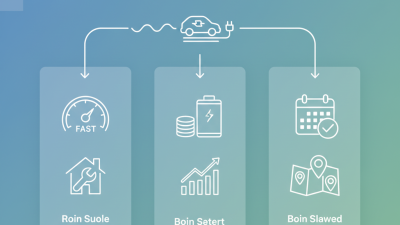
As the demand for renewable energy grows, many homeowners are considering Solar Panels And Batteries For House. According to the Solar Energy Industries Association, the U.S. solar market grew by 20% in 2022. This increase reflects both environmental concerns and economic benefits. Effective energy management can reduce costs significantly. Investing in solar technologies is now more accessible than ever.
Expert insights are essential when selecting a system. Dr. Emily Green, a renowned energy consultant, emphasizes, “Choosing the right solar panel and battery combination is crucial for maximizing efficiency.” Her research highlights the importance of compatibility and capacity. Homeowners often struggle with the overwhelming options available. This complexity can lead to decisions made without adequate understanding.
Many focus only on upfront costs. However, long-term savings are more critical. Reports show that the average homeowner can save over $30,000 over 20 years with solar. It's vital to weigh these factors carefully. Understanding the shortcomings and trade-offs in solar technology is necessary. Making informed choices can lead to a sustainable future.

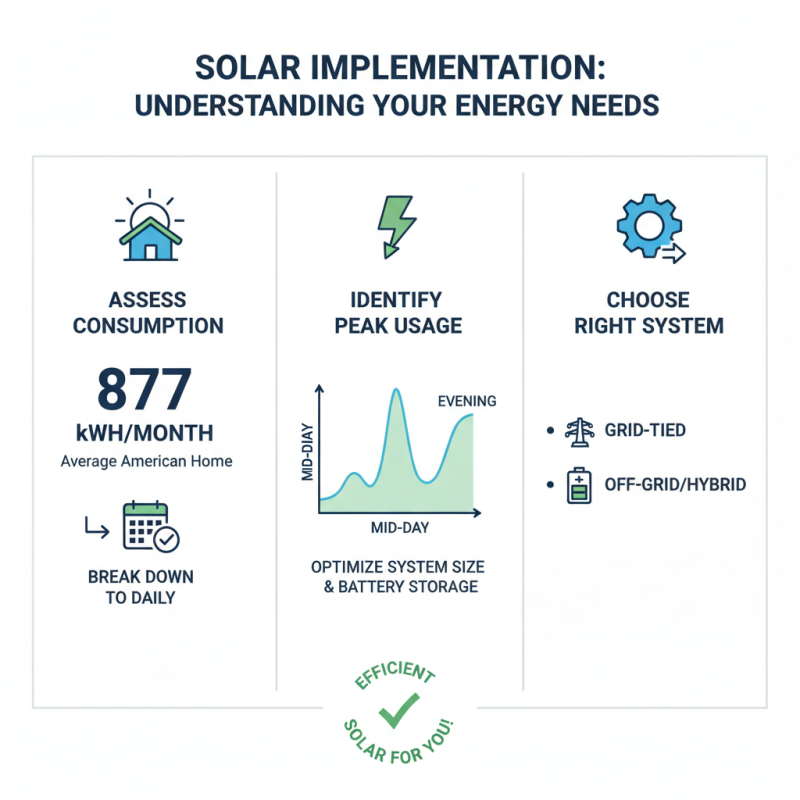
Understanding your energy needs is crucial for effective solar implementation. Begin by assessing your household's energy consumption. Reports indicate that the average American home uses about 877 kWh monthly. Break this down to daily needs. Knowing your peak usage times can help in choosing the right system.
Tip: Track monthly energy bills over a year to identify patterns in your usage. This data can guide you in selecting an appropriate size for solar panels and batteries. For optimal efficiency, consider the direction and angle of your roof. The National Renewable Energy Laboratory suggests that solar panels perform best when facing south with a tilt between 30 and 45 degrees.
Don’t rush into decisions. Solar installations are significant investments. It’s essential to compare options and understand what meets your energy profile best. Analyze the trade-offs between capacity and battery life. Industry reports show that energy storage can cost between $5,000 and $15,000. Assess how long you want your battery to last versus the upfront cost. This reflection can lead to a more tailored solar solution for your home.
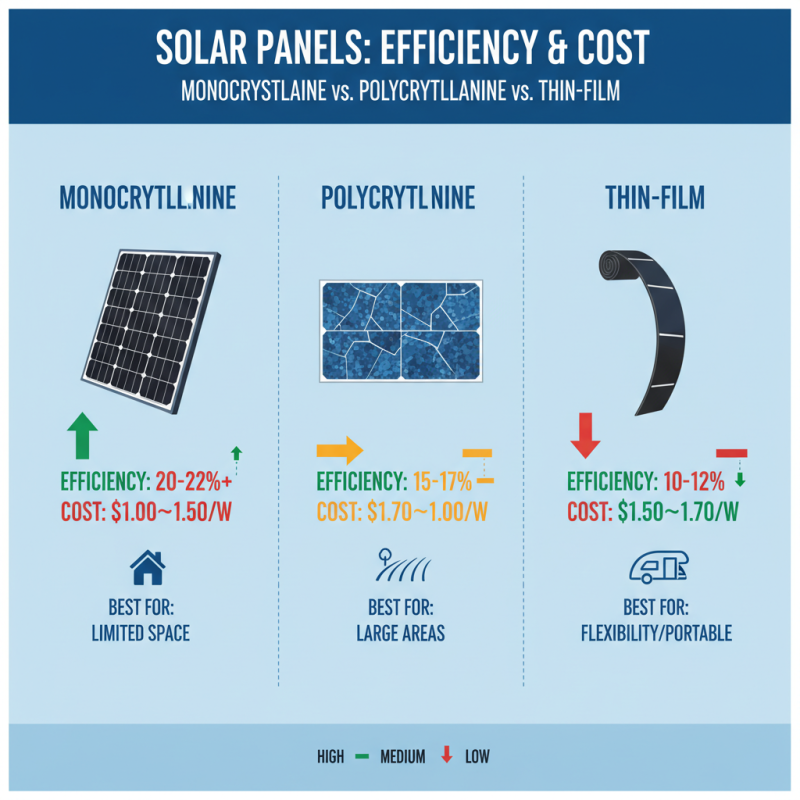
When selecting solar panels, two major factors come into play: efficiency and cost. Monocrystalline panels are known for their high efficiency, typically reaching 20% or more. This makes them ideal for limited spaces. However, they come at a higher price point, often costing up to $1 to $1.50 per watt.
On the other hand, polycrystalline panels offer a more budget-friendly option. Their efficiency ranges between 15% to 17%. While they are less efficient, their cost is generally lower, ranging from $0.90 to $1.20 per watt. This might be suitable for larger installations where space is not a constraint.
The choice between these types comes down to personal priorities. If maximizing energy output is crucial, monocrystalline is preferable. However, if budget constraints are tighter, polycrystalline may suffice. Reports indicate that the total cost of solar energy systems varies significantly, influenced by these factors. Careful consideration is necessary, as what works for one homeowner may not be suitable for another.
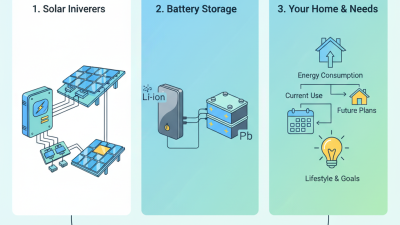
When considering battery options for solar energy storage, it's essential to evaluate several factors. Batteries enable homeowners to store excess energy generated during the day. According to the U.S. Department of Energy, over 60% of solar energy can be stored effectively with the right battery technology. Lithium-ion batteries dominate the market due to their high energy density and longer life span. However, they can come with a higher price tag.
Tip: Look for batteries with a cycle life of 3000 or more. This will ensure your investment lasts longer. Be mindful of the depth of discharge (DoD) as well; a higher DoD means you can use more of the battery's capacity.
Lead-acid batteries are an alternative, often cheaper, option. While they have a shorter cycle life and lower efficiency, they may suit homeowners with less frequent energy needs. As noted by the National Renewable Energy Laboratory, balancing cost and efficiency is crucial. Consider the overall energy requirements of your home and how often you expect to rely on stored energy.
Tip: Perform a thorough assessment of your energy consumption patterns. This can lead to better decisions for your energy storage needs. Addressing your unique situation helps optimize your solar energy system's performance.
When considering solar system installation at home, several factors come into play. Assessing your energy needs is crucial. Analyze past utility bills to estimate your average consumption. This helps to determine the number of solar panels required. Remember, energy needs can vary seasonally. A precise calculation will optimize your system's efficiency.
Space availability is another vital factor. Ensure your roof can support solar panels. Also, consider the sun's path throughout the day. Obstructions like trees or buildings may reduce efficiency. In such cases, ground-mounted systems could be a viable alternative. Additionally, check for local regulations on solar installations. Compliance ensures smooth installation and operation.
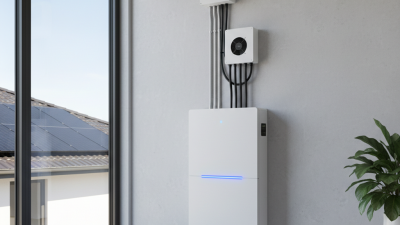
Battery storage is essential for maximizing solar energy use. Look for batteries that match your energy consumption patterns. Consider their lifespan and warranty policies. Not all batteries are created equal, and some may not last as long as expected. Reflect on your daily usage. Will you need backup during power outages? Align battery capacity with your household's needs. Balancing costs, performance, and reliability is key to a successful solar setup.
When considering solar panels and batteries for your home,
maintenance and lifespan are crucial. Solar panels generally last around
25 to 30 years, but their efficiency may decline over time. Regular cleaning is essential.
Dust, debris, and snow can block sunlight. A good practice is to inspect panels twice a year. Some homeowners find that a
professional cleaning saves time and ensures thorough maintenance.
Batteries, on the other hand, typically last
5 to 15 years. The lifespan can vary based on usage and quality. Monitoring battery health is vital.
Overcharging or deep discharging can reduce their lifespan significantly. Many users experience issues
with battery degradation, which highlights the importance of understanding charging cycles.
Keeping batteries in a stable temperature range can enhance longevity.
Consider local environmental conditions that might affect your system's lifespan.
Frequent storms or high humidity could lead to more wear. That is something to reflect upon. Investing in proper maintenance routines
will ultimately ensure that both your panels and batteries perform effectively over their intended lifespan.