What Is the Best Solar House Battery System?
Choosing the best Solar House Battery System is not simply a search for the largest battery. It requires matching storage capacity, inverter performance, household demand, and local sunlight conditions.
Imre Gyuk, a respected energy-storage specialist, has said, “Energy storage is the key to unlocking the full potential of renewable energy.” His observation explains why batteries matter after sunset, during cloudy weather, and during short power interruptions. A practical system should store enough energy for evening lighting, refrigeration, internet equipment, and essential appliances. It should not be selected from capacity figures alone.
Usable capacity matters.
Homeowners should compare battery chemistry, depth of discharge, round-trip efficiency, operating temperature, warranty coverage, and expected cycle life. Lithium iron phosphate batteries often attract attention because of their thermal stability and long service potential. However, the best choice still depends on installation quality and daily energy patterns. A household using electric heating needs a different design from one using gas heating.
An experienced installer should measure the roof’s solar output, inspect the electrical panel, and explain backup limitations clearly. The battery may not support every appliance at once. That detail is easy to miss.
A reliable Solar House Battery System also needs intelligent energy management. It should prioritize solar charging, reduce unnecessary grid purchases, and preserve reserve power when appropriate. Yet no system is perfect. Weather changes, battery aging, and unexpected demand can reduce performance. My own assessment would remain cautious without twelve months of consumption data. The strongest recommendation comes from measured usage, transparent specifications, and realistic expectations—not impressive marketing claims.
Understanding How Solar House Battery Systems Work
What Is the Best Solar House Battery System?
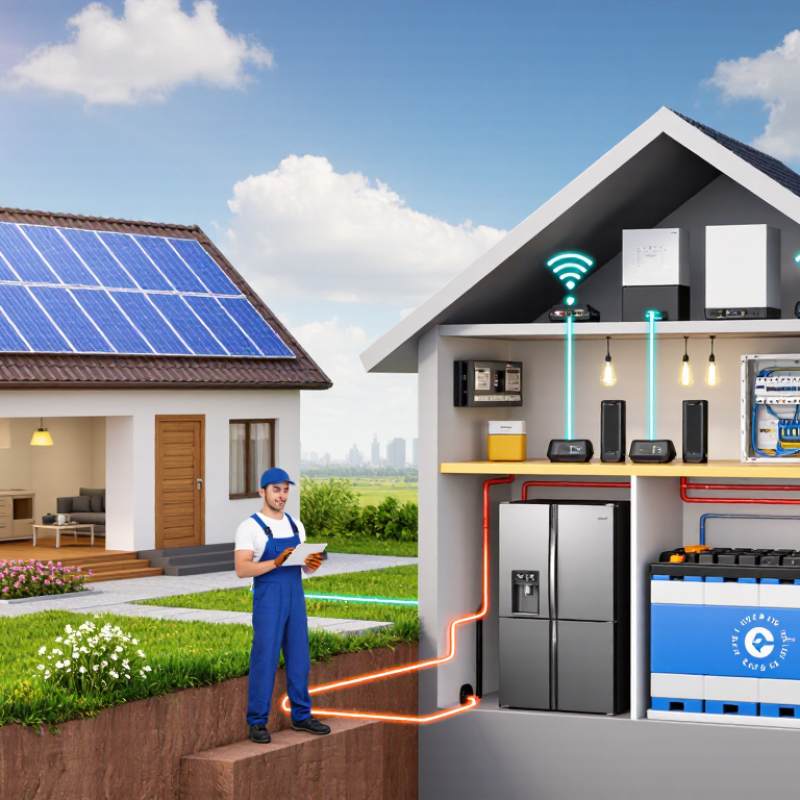
A solar house battery system stores surplus electricity for later use. Solar panels produce direct current during daylight hours. A hybrid inverter changes it into usable household alternating current. When production exceeds demand, the inverter sends extra power to the battery. After sunset, the battery supplies selected appliances, such as lights, refrigerators, and internet equipment. A battery management system monitors temperature, voltage, and charge levels. This protects the cells and supports safer operation.
The best system depends on your household’s energy pattern, not just battery size. Usable capacity matters more than the advertised capacity. Round-trip efficiency also affects how much energy returns to your home. A larger battery is not always better. It may remain partly unused, while installation costs increase. Real homes are messier than energy diagrams. Cloudy weather, seasonal demand, and sudden appliance loads can change performance. A qualified installer should review your electricity data, backup priorities, ventilation, and equipment compatibility.
Tips: Track daily consumption for several weeks before choosing a system. Check the battery’s usable capacity, warranty conditions, operating temperature, and emergency backup limits. Ask whether the system can start high-demand appliances safely. Keep essential circuits separate when full-home backup is unnecessary. I once assumed nighttime usage was predictable, but cooking and heating quickly changed the estimate. Leave room for measurement errors. Regular monitoring can reveal inefficient habits, unexpected standby loads, or a battery that is cycling more often than planned.
Comparing Battery Types, Storage Capacity, and Efficiency
Choosing the best solar house battery system depends on battery chemistry, usable capacity, and efficiency. Lithium iron phosphate batteries usually offer long cycle life, strong thermal stability, and high usable capacity. Lithium nickel manganese cobalt batteries can be compact, but their temperature management needs closer attention. Lead-acid batteries cost less initially, yet they are heavier and often tolerate fewer deep cycles. In real home assessments, usable energy matters more than the advertised capacity.
A 10 kWh battery may not deliver 10 kWh to your appliances. Depth of discharge, inverter losses, and standby consumption reduce available power. Round-trip efficiency shows how much stored electricity you recover later. A system rated near 90% efficiency wastes less energy during charging and discharging. Still, higher efficiency does not automatically mean better value. A small battery may cycle deeply every evening, while an oversized unit may sit inactive for days.
Tips:
Estimate your nighttime load from actual meter data. Include refrigeration, heating, lighting, and backup circuits. Leave some capacity for cloudy weather, but avoid sizing for rare emergencies alone. Check warranty terms, operating temperature, installation space, and replacement access. A battery that performs well in a cool garage may behave differently in a hot utility room. I have seen homeowners focus on capacity and overlook power output. That mistake can prevent several appliances from running together. Recheck your assumptions each year. Household energy habits change.
Evaluating Installation Needs, Safety, and System Compatibility
The best solar house battery system begins with the installation site, not the advertised capacity. A certified installer should inspect the main panel, service rating, wiring routes, ventilation, and wall strength. Outdoor units need protection from flooding, heat, and physical impact. Indoor placement requires careful clearance and fire-safety planning. Fit matters.
The International Energy Agency’s Batteries and Secure Energy Transitions report (2024) estimates that global battery storage capacity must expand to about 1,200 GW by 2030. This growth makes compatibility more important, not less. The battery, inverter, solar array, backup loads, and energy-management controls must communicate correctly. National Renewable Energy Laboratory guidance also emphasizes evaluating load profiles, system losses, and operating conditions before sizing equipment. A larger battery may still perform poorly if the inverter limits charging power.
Safety deserves practical attention. NFPA 855 provides installation guidance for stationary energy-storage systems, including spacing, ventilation, detection, and emergency access. Local electrical rules may add stricter requirements. Ask whether the installer can document commissioning tests and provide a maintenance plan. A neat spreadsheet can still miss an aging panel or a poorly protected cable. I would not pretend that every household needs whole-home backup. In many homes, critical-load backup offers better value, provided the transfer equipment and battery controls are compatible. Review the design after one year; real consumption often differs from the original estimate.
Calculating Costs, Savings, and Long-Term Value
What Is the Best Solar House Battery System?
Calculating Costs, Savings, and Long-Term Value
The best solar house battery system depends on your daily electricity use, not its advertised capacity. Measure evening consumption for one week. A typical home may use 6 kilowatt-hours after sunset, including refrigeration, lighting, internet equipment, and cooking. A battery with 8 kilowatt-hours of usable capacity could cover that demand, but only under favorable conditions.
Calculate the financial value with realistic figures. Start with the installed cost, then subtract available incentives where legally applicable. Estimate annual savings from stored solar power and reduced grid purchases. Include round-trip efficiency, which commonly reduces delivered energy. For example, 8 kilowatt-hours stored at 90% efficiency provides about 7.2 kilowatt-hours. Multiply that amount by your local electricity rate and expected annual cycles. Time-of-use pricing can improve savings when evening electricity costs more.
Long-term value requires more than a simple payback period. Check the warranty, usable capacity, temperature limits, maintenance needs, and replacement assumptions. Battery capacity also declines over time. A system may still operate after ten years, but it might store less energy than expected. Backup power adds value during outages, although essential circuits may require separate electrical work. A first calculation can look attractive and still miss installation costs or low winter solar production. Recheck the numbers using your own utility bills, roof output, and household habits. That extra review is often uncomfortable, but it can prevent an expensive mismatch.
What Is the Best Solar House Battery System? - Calculating Costs, Savings, and Long-Term Value
| System Size |
Usable Energy |
Typical Chemistry |
Round-Trip Efficiency |
Estimated Installed Cost |
Expected Cycle Life |
Typical Warranty Term |
Estimated Annual Bill Savings |
Simple Payback |
15-Year Gross Savings |
15-Year Net Value |
| 5 kWh |
4.5 kWh |
Lithium iron phosphate (LFP) |
90% |
$4,000 |
6,000+ cycles |
10 years |
$325 |
12.3 years |
$4,210 |
$210 |
| 10 kWh — Balanced option |
9.0 kWh |
Lithium iron phosphate (LFP) |
90% |
$6,500 |
6,000+ cycles |
10 years |
$650 |
10.0 years |
$8,420 |
$1,920 |
| 15 kWh |
13.5 kWh |
Lithium iron phosphate (LFP) |
90% |
$9,000 |
6,000+ cycles |
10 years |
$976 |
9.2 years |
$12,640 |
$3,640 |
| 20 kWh |
18.0 kWh |
Lithium iron phosphate (LFP) |
90% |
$11,500 |
6,000+ cycles |
10 years |
$1,301 |
8.8 years |
$16,850 |
$5,350 |
Calculation assumptions:
Values are illustrative planning estimates based on a residential battery operating in a location with an average retail electricity price of
$0.30 per kWh and an export credit of $0.08 per kWh. Each system is assumed to deliver 90% of its usable capacity on 328 equivalent operating days per year,
with annual savings declining by approximately 2% to reflect gradual capacity degradation. Installed costs include the battery, standard installation,
electrical equipment, and commissioning, but exclude major service-panel upgrades, structural work, permitting variations, and tax incentives.
Formula:
Annual savings = usable energy × 328 operating days × ($0.30 − $0.08). Simple payback = installed cost ÷ first-year savings.
Fifteen-year net value = cumulative fifteen-year savings − installed cost. Actual results vary with household electricity use, solar production,
local tariffs, climate, financing, installation complexity, and battery operating settings.
Choosing the Best Solar Battery System for Your Home
Choosing the best solar battery system starts with your household’s actual energy habits. Review electricity bills across several seasons. A family using an induction cooker, heat pump, and electric vehicle needs more power than a small apartment. Evening demand matters most. That is when solar production usually falls.
Check usable capacity, not only the advertised storage size. A 10-kilowatt-hour battery may provide less after reserve limits and conversion losses. Power output matters too. A battery can store enough energy yet struggle with a kettle, refrigerator, and pump running together. Ask for tested round-trip efficiency and clear discharge limits. Small details affect daily comfort.
Compatibility should be examined before purchase. The battery must work with your solar inverter, wiring, monitoring system, and backup circuits. Confirm installation space, ventilation requirements, flood protection, and local electrical approval. Indoor and outdoor conditions are not identical. A qualified installer should calculate expected loads instead of guessing from panel size. Request warranty terms in plain language, including capacity retention and service response.
Safety certification and independent testing deserve attention. Do not choose solely by price. A cheaper system may need extra equipment or costly changes later. I have seen estimates look impressive until winter heating demand was included. That mistake is easy to make. Leave room for honest uncertainty, especially when future electricity use may change. Check the monitoring app regularly, but remember that software estimates can be imperfect.
What Is the Best Solar House Battery System?
Lithium iron phosphate (LFP) batteries generally provide the strongest balance of efficiency and usable capacity for residential solar storage. Nickel manganese cobalt (NMC) batteries offer high performance in a compact design, while lead-acid systems typically have lower efficiency and usable depth of discharge. Actual results vary with system design, temperature, installation quality, and operating conditions.