Top Solar Inverters And Battery Storage Suppliers?

Choosing reliable Solar Inverters And Battery Storage suppliers requires more than comparing advertised prices. The market includes global manufacturers, regional specialists, and newer companies with limited operating history. This guide examines suppliers through product quality, technical support, warranty strength, and documented field performance. It also considers whether their equipment suits homes, farms, commercial buildings, or larger energy projects. A supplier that performs well in one climate may disappoint in another. Local service matters. Small details matter.

Experienced installers often begin with inverter efficiency, battery cycle life, thermal protection, and monitoring software. They also check certification records, replacement procedures, and compatibility with existing electrical systems. A clear warranty can be more valuable than a slightly higher efficiency rating. Suppliers should explain performance limits honestly, including reduced output during extreme heat or extended outages. Independent testing and transparent documentation strengthen credibility. Customer reviews can help, but they should not replace professional assessments.

This introduction prepares readers to compare leading suppliers with practical judgment. It avoids treating “top” as a permanent ranking. Product reliability changes as factories, software, and service networks evolve. Even established brands can create frustrating support experiences. That point deserves attention. The following discussion will connect technical specifications with real purchasing risks, installation conditions, and long-term ownership costs. Readers should verify current certifications, installer qualifications, and regional availability before signing a contract. Careful research cannot remove every uncertainty, but it can reduce expensive surprises.
Top Solar Inverters And Battery Storage Suppliers?

Solar Inverter and Battery Storage Systems Explained

Top Solar Inverters and Battery Storage Suppliers?

Solar inverter and battery storage systems explained

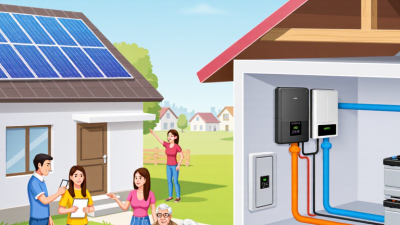
A solar inverter converts direct current from rooftop panels into usable alternating current for household appliances. It also monitors voltage, frequency, and power flow. During a site inspection, installers often check cable routes, ventilation, and the main electrical panel before recommending equipment. Small details matter. A shaded battery room can reduce thermal stress, while poor airflow may shorten service life.

Battery storage captures surplus solar energy for evening use or power outages. A typical system includes lithium-based battery modules, a battery management system, safety disconnects, and monitoring software. Hybrid inverters can manage both solar generation and battery charging. However, compatibility is never automatic. Voltage ranges, communication protocols, and backup-load limits must match precisely.

Reliable suppliers should provide clear efficiency data, warranty conditions, installation guidance, and replacement procedures. Ask how performance is measured, not only the headline capacity. A ten-kilowatt-hour battery may provide less usable energy after reserve limits and conversion losses. That difference is easy to overlook. It is also worth checking local service capacity, because delayed technical support can leave a household waiting during a fault.

No system is perfect. Weather changes, batteries age, and household demand is difficult to predict. A careful design leaves room for these uncertainties instead of promising unrealistic savings. Independent testing, qualified installation, and regular monitoring make the system safer and more dependable.

Solar Inverter and Battery Storage Systems Explained

Round-trip efficiency shows how much electricity can be recovered after energy is stored and discharged. DC-coupled lithium-ion systems generally reduce conversion losses, while flow batteries, lead-acid batteries, and pumped-hydro systems typically operate within different efficiency ranges.

Indicative industry benchmark values: actual performance varies with inverter efficiency, battery temperature, charge and discharge rates, system age, operating conditions, and installation design.

Key Criteria for Comparing Solar Energy Suppliers

Top Solar Inverters And Battery Storage Suppliers?

Key Criteria for Comparing Solar Energy Suppliers

Choosing a solar energy supplier requires more than comparing equipment prices. Start with system compatibility, conversion efficiency, and battery capacity. Ask how the inverter performs during cloudy mornings and high summer temperatures. A clear specification sheet should show peak efficiency, operating voltage, noise levels, and protection features. Real conditions matter more than laboratory figures.

Battery evaluation needs equal attention. Check usable capacity, round-trip efficiency, expected cycle life, and temperature limits. A battery may appear affordable but provide less usable energy after reserve settings. Review warranty terms carefully, including performance guarantees and replacement conditions. Monitoring software should display daily production, household consumption, and battery status without confusing gaps. Simple data is useful.

Supplier reliability also depends on service quality. Look for qualified installers, documented safety testing, responsive technical support, and transparent delivery schedules. Request references from installations with similar roof size, shading, and evening demand. Local maintenance capacity can matter more than a slightly lower quote. Do not ignore removal or recycling arrangements.

No comparison is perfect. Datasheets often describe ideal conditions. Installation quality can change actual results dramatically. I would question unusually high savings estimates, especially when they ignore winter output or battery degradation. A careful buyer should compare total ownership costs, not just the first invoice. Sometimes, the cheapest system is the least predictable choice.

Leading Solar Inverter Manufacturers and Their Product Strengths

Leading solar inverter manufacturers distinguish themselves through dependable conversion, flexible system design, and responsive technical support. Their residential models often combine grid connection, battery charging, and backup control in one enclosure. That saves wall space. High-efficiency designs can reduce energy losses during cloudy mornings and late afternoons. However, laboratory efficiency does not always reflect real household performance. Temperature, shading, cable length, and software settings matter.

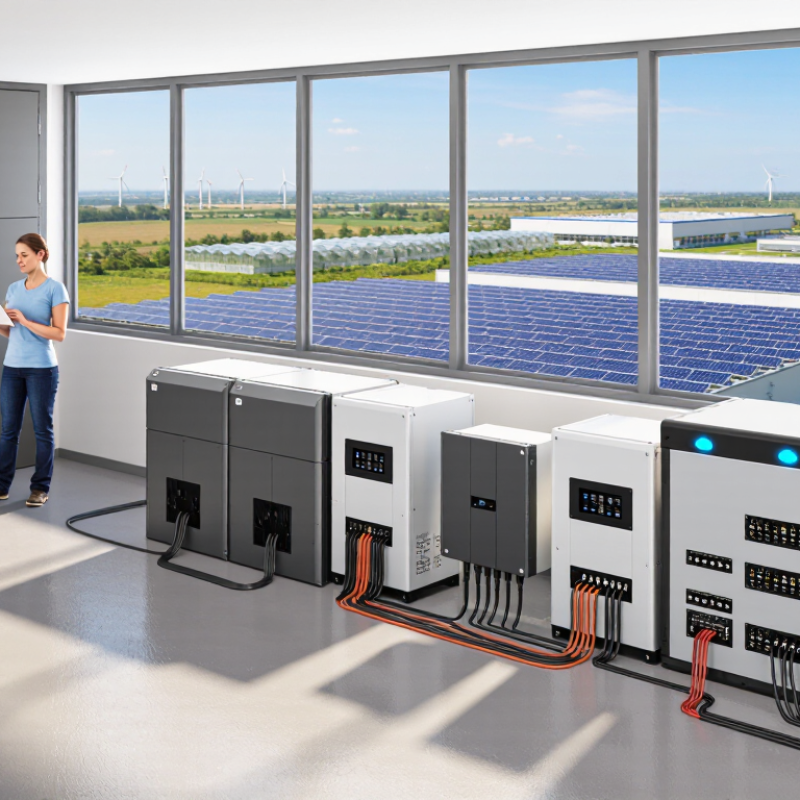
For commercial projects, established manufacturers usually offer three-phase inverters, modular battery interfaces, and monitoring platforms for multiple sites. Their stronger products support rapid shutdown, arc-fault detection, remote diagnostics, and documented grid-compliance testing. Engineers should also examine inverter overload capacity. A system may need extra power when pumps, compressors, or workshop tools start. Warranty length matters, but local service capacity matters more. A replacement unit that arrives months late creates an expensive interruption.

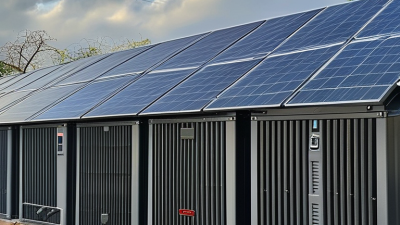
Battery-focused suppliers often provide scalable storage cabinets with thermal monitoring and layered protection. Good documentation explains usable capacity, charging limits, installation clearances, and expected degradation. Product ecosystems can simplify commissioning, yet they may restrict future equipment choices. That is a real trade-off. Installers should test communication between the inverter, battery management system, and energy meter before handover. Small data errors can produce confusing consumption reports. Independent testing, qualified technicians, and transparent support records offer stronger evidence than impressive advertising claims.

Top Solar Inverters And Battery Storage Suppliers? - Leading Solar Inverter Manufacturers and Their Product Strengths
Supplier-neutral comparison of major inverter and battery-storage product categories
Product Category Typical Rated Power Typical Maximum Efficiency Battery Integration Recommended Application Key Product Strengths Important Selection Criteria
Residential String Inverter 3–15 kW per inverter Approximately 97.5%–98.5% Usually paired with a separate battery inverter or compatible high-voltage battery system Rooftop solar systems for houses and small buildings Good balance of cost, efficiency, serviceability and system flexibility MPPT voltage range, number of MPPT inputs, backup capability, outdoor protection rating and monitoring functions
Residential Hybrid Inverter 3–15 kW per inverter Approximately 97%–98.5% Directly manages photovoltaic generation, battery charging, backup loads and grid interaction Self-consumption, time-of-use energy shifting and residential backup power Integrated energy management reduces additional equipment and simplifies installation Battery voltage range, backup transfer time, continuous and surge output, export-control functions and generator compatibility
Module-Level Microinverter Approximately 0.25–0.6 kW per module Approximately 96.5%–97.5% Normally requires a separate battery inverter or AC-coupled storage system Complex rooftops, shaded arrays, multiple roof orientations and small commercial systems Module-level monitoring, independent maximum-power tracking and improved design flexibility Module power compatibility, communication reliability, replacement process and system-level operating temperature
Commercial String Inverter 30–150 kW per inverter Approximately 98%–99% Can be combined with AC-coupled or DC-coupled commercial battery storage Factories, warehouses, retail buildings, schools and agricultural facilities High power density, multiple MPPT channels, lower balance-of-system cost and scalable deployment Maximum DC oversizing ratio, arc-fault protection, reactive-power control, communications and service support
Utility-Scale Central Inverter Approximately 1–6.25 MW per inverter block Approximately 98.5%–99% Suitable for large DC-coupled photovoltaic-plus-storage plants or AC-coupled battery projects Utility-scale solar farms and large renewable-energy parks High efficiency at large power levels, centralized plant control and reduced equipment count Grid-code compliance, medium-voltage transformer integration, fault ride-through, harmonic performance and long-term service capability
Battery Power Conversion System Approximately 50 kW–2.5 MW per conversion unit Approximately 98%–99% one-way conversion efficiency Designed specifically to charge and discharge batteries while converting DC and AC power Commercial and utility-scale energy storage, peak shaving, frequency regulation and renewable integration Fast bidirectional response, precise active and reactive-power control and flexible grid-services operation Round-trip efficiency, overload capability, grid-forming functions, black-start support and battery-management-system communication
Lithium Iron Phosphate Storage System Residential systems from approximately 5–30 kWh; larger systems from hundreds of kWh to multi-MWh System round-trip efficiency commonly around 85%–95%, depending on configuration Integrated with hybrid inverters, battery inverters or utility-scale power-conversion systems Daily energy shifting, backup power and stationary grid storage Strong thermal stability, long cycle life and widespread suitability for stationary storage Usable capacity, operating temperature, thermal management, fire-safety design, warranty throughput and installation location
AC-Coupled Solar-plus-Storage System From approximately 5 kW residential systems to multi-MW projects Typically lower total conversion efficiency than direct DC coupling because power passes through additional conversion stages Battery inverter operates independently from the existing photovoltaic inverter Retrofit projects, expansion of existing solar plants and systems requiring independent battery operation Flexible retrofitting, independent sizing and easier integration with installed photovoltaic equipment Available grid capacity, conversion losses, protection coordination, control architecture and backup-islanding design
DC-Coupled Solar-plus-Storage System Residential systems up to tens of kW; utility projects from hundreds of kW to multi-MW Can improve solar-to-battery charging efficiency by reducing conversion stages Photovoltaic array and battery share a DC-side power-conversion architecture New solar-and-storage projects, clipped-energy recovery and high-renewable-utilization plants Efficient capture of excess photovoltaic energy and potential reduction in AC-side equipment DC voltage coordination, battery charge limits, oversizing strategy, control software and maintenance access
Data note: The figures are technology-level ranges compiled from commonly published specifications and industry reference data. Actual values vary by model, operating conditions, battery configuration, grid code, installation design and certification requirements. Efficiency figures should not be interpreted as guaranteed annual system performance.

Top Battery Storage Suppliers and Available Technologies

Battery storage suppliers are increasingly judged by safety, delivery records, and lifetime performance, not name recognition. The International Energy Agency’s Batteries and Secure Energy Transitions report says global battery storage capacity must reach about 1,200 GW by 2030. That target is roughly fourteen times the 2023 level. Suppliers with automated cell production, traceable materials, and strong recycling plans appear better prepared for this expansion.

Lithium iron phosphate Lithium iron phosphate remains the practical choice for many utility projects. It offers strong thermal stability, long cycle life, and lower material costs. Nickel-based lithium batteries can provide higher energy density, but they demand stricter temperature control. The U.S. National Renewable Energy Laboratory reports typical lithium-ion round-trip efficiency near 85–95%. Real projects may perform worse. Heat, standby losses, and poor commissioning matter.

Long-duration storage Long-duration storage needs different tools. Flow batteries suit repeated deep cycling, while sodium-ion systems may reduce dependence on critical minerals. Their commercial track records remain shorter. That deserves caution. Wood Mackenzie’s global storage research continues to show rapid growth in four-hour systems, yet local grid needs vary sharply. The best supplier is not always the largest. Buyers should examine degradation curves, warranty exclusions, fire testing, software response times, and service support over ten years. Supplier rankings change quickly.

How to Select the Right Supplier for Your Solar Project

Choosing a solar supplier starts with your project, not a sales ranking. A reliable supplier should match inverter capacity, battery chemistry, roof conditions, and local grid rules. Ask for datasheets, test reports, warranty terms, and documented installation guidance. Avoid vague promises. Check whether the supplier has completed systems with similar loads and weather exposure. Request two or three customer references, preferably for projects operating beyond one year.

◆ Technical support matters after delivery. Clarify response times, spare-parts availability, firmware procedures, and who handles warranty claims. A strong supplier can explain battery depth of discharge, round-trip efficiency, surge capacity, and backup limitations in plain language. Ask for a sample energy model using your hourly consumption, not a generic annual estimate. The model should show winter output, battery cycling, shading losses, and expected degradation. Small details matter. Confirm communication protocols and compatibility with existing meters, generators, or electric-vehicle chargers.

Price comparisons need more than equipment costs. Include commissioning, monitoring, inspections, shipping, taxes, and future battery replacement. I have seen inexpensive proposals become costly when cable upgrades and protection devices appeared late. That experience makes me question unusually short quotations. A supplier with clear assumptions is easier to trust, even when the quote is not the lowest. Still, no supplier is perfect. Review exclusions carefully, record every technical promise, and have a qualified local installer verify the final design.