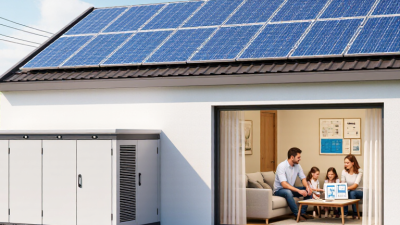
Electricity use at home rarely matches the hours when solar panels produce the most power. A Domestic Battery Energy Storage system stores electricity for later use, helping households make better use of their own generation or respond to time-based electricity rates where available. It typically includes a battery, an inverter, and controls that manage charging and discharge. In a typical setup, surplus midday solar power charges the battery; after sunset, stored energy can supply selected household circuits. Real homes are messier. Seasonal sunlight, heating demand, and appliance use all affect how much energy a household can store and use.
Understanding the equipment starts with two practical measures: capacity, expressed in kilowatt-hours, and power, expressed in kilowatts. Capacity indicates how much energy is stored; power indicates how much can be delivered at once. A larger battery is not automatically the right choice. The useful size depends on consumption patterns, solar output, budget, and the system’s intended role. Some systems can provide backup during an outage, but only when designed and configured for that function. Safety matters, too: equipment should be installed and maintained according to manufacturer instructions by qualified professionals. This guide explains how the components work, what affects system performance, and which questions to ask before choosing one. A specification sheet cannot predict every household’s needs, so estimates deserve a careful second look.
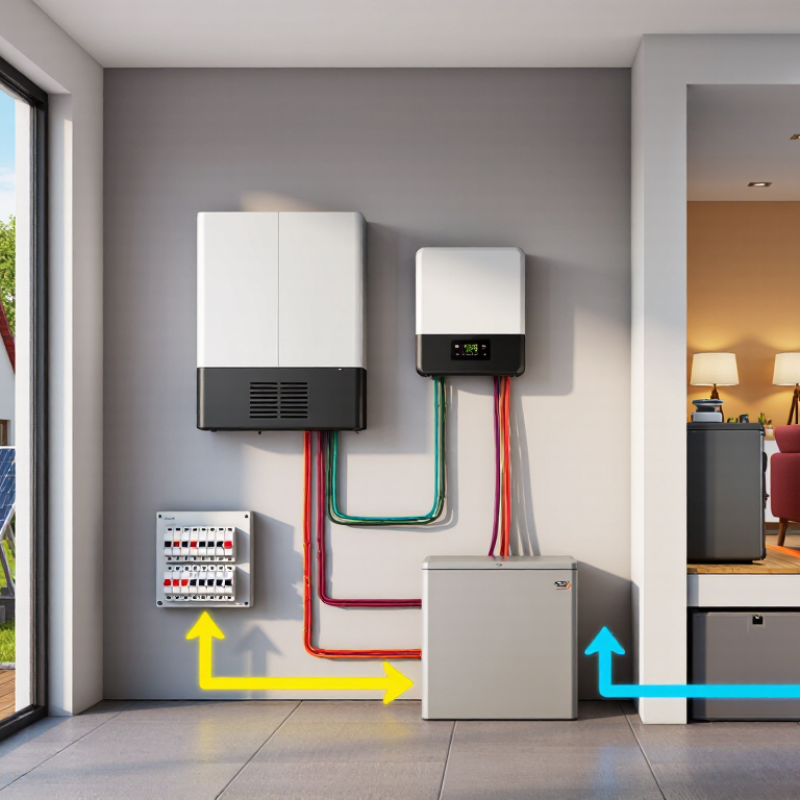
A domestic battery energy storage system stores electricity for use later in a home. It usually combines battery cells, a battery management system, an inverter, and monitoring controls. The cells hold energy; the inverter converts it into the form household appliances use. A qualified installer checks the home’s wiring and load needs before selecting a system.
The battery may charge from rooftop solar or the grid, then supply selected circuits when solar output drops or power is interrupted.
Capacity, measured in kilowatt-hours, describes stored energy. Power, measured in kilowatts, describes how quickly the system can deliver it. Both matter. A battery can have ample capacity yet struggle to run several high-demand appliances at once.
The U.S. Department of Energy describes storage as a way to shift electricity from one time to another, rather than create new energy.
The International Energy Agency’s 2024 Batteries and Secure Energy Transitions report notes that lithium-ion battery prices fell about 90% between 2010 and 2023. That trend does not guarantee a low-cost home installation; equipment, labor, and backup needs still shape the bill.
The fit is rarely perfect. Household demand changes, and backup circuits may need careful prioritizing.
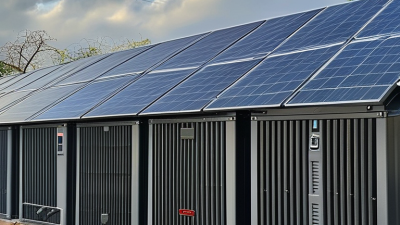
A domestic battery energy storage system stores electricity for use later, often in battery modules installed in a utility room or garage. The modules contain many cells, arranged to provide usable capacity. Their weight and ventilation needs matter; a narrow cupboard may not be suitable. Small detail, big consequence.
A battery management system monitors cell voltage, temperature, and charge levels. It can limit operation when readings move outside safe ranges. The inverter converts battery direct current into the alternating current used by household circuits. Some systems also use it to charge the battery.
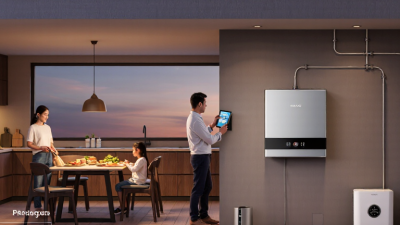
A home energy controller coordinates charging and discharging, using settings, generation, and household demand. It is not always perfectly predictive. Cloudy afternoons and sudden appliance use can complicate its decisions.
Meters measure electricity moving between the home, battery, and grid. A backup transfer switch, where fitted, separates selected circuits from the grid during an outage. Not every system provides backup, and not every appliance can run at once. Wiring, protective devices, and enclosure design also shape safe operation. These parts are less visible, but a qualified installer should assess them for the home’s electrical layout and expected loads. A neat-looking installation alone proves little.
What Is a Domestic Battery Energy Storage System?
How the System Stores and Supplies Electricity
A domestic battery stores electricity as chemical energy for later use. When power flows into the battery, its cells hold that energy until the home needs it. A battery management system monitors cell conditions, while an inverter converts stored direct current into alternating current for household circuits. That distinction matters. The battery does not make electricity; it shifts when available electricity is used.
During the day, a system may charge from rooftop solar panels. Some systems can also charge from the grid, depending on their setup. In the evening, stored power can run selected appliances, such as lights, a refrigerator, or a router. During an outage, backup equipment may disconnect supported circuits from the grid. Not every home circuit is necessarily backed up. Energy is limited, and conversion also loses a little along the way. It is easy to overlook how quickly heating appliances can use that reserve.
Tips: Check which circuits the system supports, its usable capacity, and its expected output. Match those figures to the appliances you actually need. A little planning helps; guessing can leave the battery depleted sooner than expected.
| System part or stage | What it does | How electricity moves | Useful detail |
|---|---|---|---|
| Electricity source | Supplies electricity that can be used in the home or stored for later. | Power may come from rooftop solar panels, the utility grid, or both, depending on the installation and settings. | A battery does not generate electricity; it stores energy supplied by another source. |
| Inverter and charger | Converts electricity between the forms used by the battery and the home. | During charging, the system converts incoming power as needed for the battery. During discharge, it supplies AC electricity for household circuits. | Some systems use a hybrid inverter; others use a separate battery inverter. The configuration affects how the system connects to solar and the home. |
| Battery cells and pack | Store energy through reversible electrochemical reactions. | Charging stores energy in the cells; discharging releases it as electrical energy. | Many residential systems use lithium-ion chemistry. The usable capacity is less than or equal to the battery’s rated capacity and depends on the model and settings. |
| Battery management system (BMS) | Monitors battery conditions and helps control safe operation. | It tracks factors such as cell voltage and temperature and can limit charging or discharging when operating conditions require it. | Protection limits and operating behavior vary by battery design and manufacturer specifications. |
| Home energy controls | Coordinate charging and discharging according to settings, electricity availability, and household demand. | The system can be configured to store surplus solar power, charge from the grid where permitted, or discharge to support household loads. | Actual behavior depends on the system configuration, utility rules, and any time-of-use or backup settings. |
| Supplying household loads | Provides stored electricity when the home needs power. | Battery power passes through the inverter and is directed to supported household circuits or, in some setups, the home’s broader electrical system. | Power output and duration depend on the battery’s usable capacity, inverter rating, and the size and type of connected loads. |
| Grid outage operation | Can provide backup power if the installation is designed for islanded operation. | A transfer or isolation device disconnects the home’s backed-up circuits from the utility grid before the system supplies them. | Not every battery installation provides backup. Backup coverage, start-up behavior, and supported loads depend on the equipment and wiring. |
| Round-trip efficiency | Describes how much energy is returned compared with the energy used to charge the system. | Some energy is lost during charging, storage, and conversion, so delivered energy is lower than charging energy. | Efficiency varies by system, operating conditions, and whether it is measured on an AC or DC basis; consult the product’s rated specifications. |
In short: a domestic battery energy storage system stores electricity for later use, converts it to a form suitable for household loads, and manages charging and discharge. Its capabilities depend on the installed equipment and system configuration.
A domestic battery storage system usually uses lithium-ion cells, with lithium iron phosphate (LFP) and nickel manganese cobalt (NMC) among common chemistries. LFP batteries generally offer long cycle life and good thermal stability, while NMC cells can store more energy in a smaller space. Chemistry matters. Lead-acid batteries may cost less initially, but their weight, usable capacity, and service life can make them less practical for daily household cycling. Actual performance depends on the model and operating conditions.
System configuration affects how a battery connects to solar panels and household circuits. An AC-coupled system has its own inverter and can suit a home adding storage to existing solar equipment. A DC-coupled setup links panels and battery through a compatible hybrid inverter, which may reduce conversion steps. Retrofits can be awkward. Compatibility, cable routes, and available installation space all matter.
Some systems come as a single unit; others use modular battery packs that can be expanded as needs change. Check usable capacity, not just the headline capacity, and consider the loads you want to run during an outage. A refrigerator, router, and a few lights need less power than electric cooking or heating. A tidy estimate can still miss everyday habits, so reviewing actual usage helps prevent an undersized or unnecessarily large system.
A domestic battery energy storage system stores electricity for use later, such as during the evening or a power outage. Battery chemistry and system configuration affect performance, lifespan, and installation needs.
Round-trip efficiency is the share of stored electricity that can be used again after charging and discharging. These ranges are typical estimates; actual performance varies by product, operating conditions, and system design.
A domestic battery energy storage system stores electricity for later use, often alongside rooftop solar panels. During sunny hours, excess power can charge the battery; after sunset, it may run selected lights, a refrigerator, or home electronics. That can reduce grid use and provide backup during some outages. Quietly useful. Yet backup is not unlimited. A battery’s usable capacity and power output determine which appliances can run and for how long.
Households should compare expected loads with the system’s specifications, not rely on a single “hours of backup” estimate. Heating equipment, pumps, and electric cooking can drain stored energy quickly. Batteries also cost money, occupy space, and gradually lose capacity. A cloudy stretch may leave little solar energy to store. That trade-off is easy to underestimate.
Safety depends on suitable equipment, careful installation, and following the manufacturer’s operating instructions. Keep the unit in its approved location, away from heat, moisture, and blocked ventilation. Do not cover it or attempt repairs yourself. A qualified installer can check wiring, protective devices, and whether the battery suits the home’s electrical setup. Homeowners should know how to read alerts and whom to contact if the unit smells unusual, becomes hot, or shows visible damage. Even a well-designed system deserves regular attention.