China Best Residential Battery Storage System Suppliers

Choosing a China-based supplier for a Residential Battery Storage System means looking beyond price and advertised capacity. Homeowners need equipment that fits their daily energy use, roof or grid setup, and available installation space. A battery that looks suitable on a specification sheet may not work smoothly with an existing inverter.

This guide examines how to compare suppliers using practical, verifiable details. Check usable capacity, battery chemistry, cycle-life conditions, operating temperature, and warranty coverage. Ask for product test reports, safety documentation, and clear installation instructions. Details matter. A polished brochure can still leave gaps. Buyers should also confirm whether the supplier offers technical support, spare parts, and help with system commissioning. Response times can matter when a fault appears on a cold evening.

Supplier experience is worth examining, but it should be supported by evidence. Request project references, production quality procedures, and an explanation of how each model is tested before shipment. Compare quotations carefully; some exclude monitoring equipment, delivery, or after-sales service. That takes work. It is also easy to focus too much on a single metric, such as price per kilowatt-hour. Real household use is less tidy than a spreadsheet. The sections ahead outline key supplier questions, product features, and evaluation steps, helping buyers make a more informed shortlist without treating any supplier as a perfect fit.
China Best Residential Battery Storage System Suppliers

Residential Battery Storage Systems in China

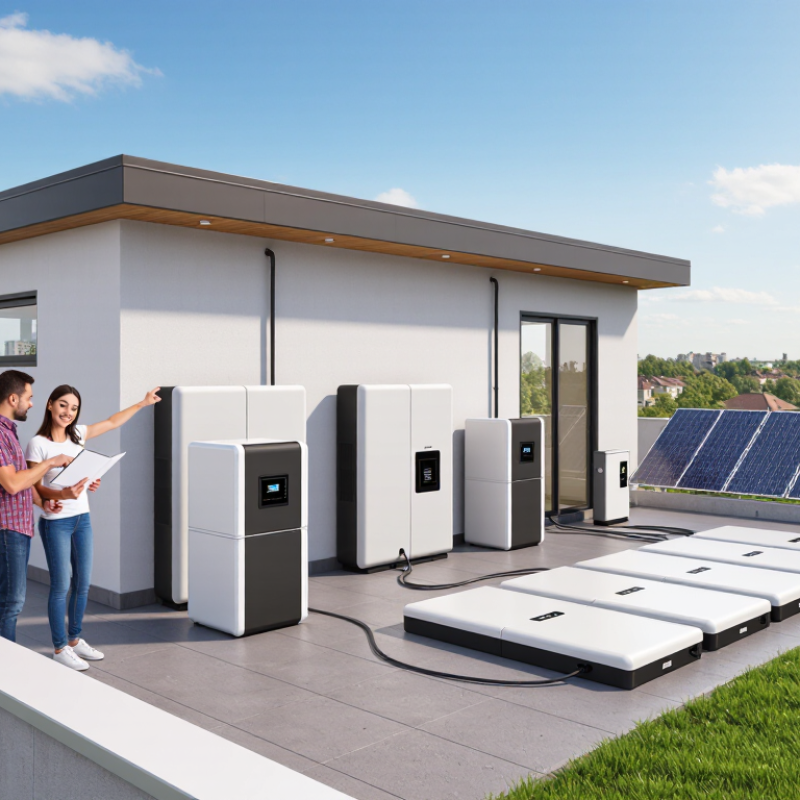
Residential battery storage systems in China serve homes with differing climates, roof designs, and electricity use. In coastal cities, humid air and limited balcony space can complicate equipment placement. Inland households may face larger temperature swings. A careful site survey should check ventilation, wall strength, cable routes, and distance from living areas. Small details matter. A system sized from a real evening load profile is usually more useful than one chosen only by advertised capacity. Refrigerators, lighting, routers, and air conditioners have different demands. Installers should explain usable capacity, inverter limits, expected backup duration, and what happens when the battery is nearly empty.

Battery chemistry, thermal management, and independent test documentation deserve close review. Ask how the enclosure handles heat, dust, and moisture, and whether monitoring can flag unusual temperatures or charging behavior. Good commissioning includes checking protective devices and testing a controlled backup transfer, not just switching on an app. That matters. Residential layouts are not always ideal, and household routines change. A battery that looks adequate on paper may disappoint during a long outage or a hot week with heavy cooling use. It is sensible to compare several load scenarios and leave room for uncertainty. Local service access, warranty terms, and replacement procedures also affect long-term value. One thing gets missed: maintenance visits need to be practical.
How Home Battery Systems Store and Manage Energy

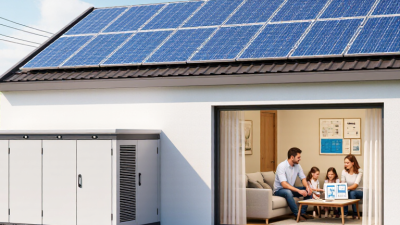
A residential battery does not simply “save solar power”; it converts and routes energy through controlled stages. Panels produce direct current (DC), while household circuits typically use alternating current (AC). An inverter manages this conversion, and battery cells store energy chemically for later use. Surplus daytime solar can charge the battery. After sunset, stored energy may run lights, refrigeration, or a heat pump. Not magic. Conversion losses matter. NREL’s 2024 Annual Technology Baseline uses 85% round-trip efficiency as a utility-scale lithium-ion modeling assumption, not a guarantee for home systems. Actual performance depends on equipment, temperature, power levels, and operating settings.

A battery management system monitors cell voltage, temperature, and state of charge. An energy management controller uses that information to decide when to charge, discharge, or preserve backup capacity. It may respond to solar forecasts, household demand, or time-based electricity rates. During an outage, compatible equipment can isolate selected circuits and supply them from stored energy. A refrigerator and a few lights usually demand less power than electric heating or cooking. That distinction matters: energy capacity describes how long a battery can supply power, while output rating affects which loads it can run at once. Forecasts still miss cloudy afternoons, and reserve settings can be inconvenient. Real homes are messier than the control screen suggests.

China’s Residential Battery Supplier Landscape

China’s residential battery supplier landscape includes cell manufacturers, battery-pack assemblers, and complete-system integrators. Their offers may look similar, but responsibilities differ. One supplier may produce battery modules, while another adds an inverter, monitoring software, and installation guidance. Ask who handles each part. Details matter.

A useful comparison starts with the home’s actual needs: daily energy use, peak loads, backup duration, and available installation space. Check usable capacity, continuous output, operating temperature range, and compatibility with the chosen inverter. Request test documentation, warranty conditions, and clear limits on expected battery performance. A polished brochure is not proof of long-term reliability. Supplier support matters too. Ask how faults are diagnosed, where replacement parts are held, and how technical questions are handled across time zones. These details are easy to overlook.

Tips: Request a sample system diagram and a written list of included components. Compare quotations line by line, including monitoring, cabling, and commissioning support. Ask for references from installations with similar climates and household loads. Verify documents independently where possible. No checklist catches every mismatch. Leave room for uncertainty, and record any unanswered questions before placing an order.

China Best Residential Battery Storage System Suppliers - China’s Residential Battery Supplier Landscape

Supplier Segment Typical Residential Offering Battery Chemistry Common System Configuration Key Selection Considerations Relevant Standards and Market Requirements
Battery-pack and module manufacturers Battery modules or packs supplied for integration with compatible inverters and energy-management equipment. Lithium iron phosphate (LFP) is widely used in stationary storage; other lithium-ion chemistries may also be offered. Modular low-voltage or high-voltage battery systems; capacity and operating limits depend on the specific product. Confirm inverter compatibility, usable capacity, continuous power, communications protocol, installation requirements, and warranty conditions. Check applicable product safety and transport documentation. IEC 62619 addresses safety requirements for industrial lithium secondary cells and batteries, including stationary applications; UN 38.3 concerns transport testing.
Integrated storage-system manufacturers Packaged battery systems combining battery modules, battery management, and system-level controls; some configurations include an inverter. LFP is a common choice for residential stationary systems because of its thermal and cycle-life characteristics. Wall-mounted or floor-standing systems, sometimes expandable through additional compatible modules. Review system-level safety features, expansion limits, backup capability, monitoring, installation guidance, and local service arrangements. For a grid-connected installation, confirm that the complete system and installation meet the destination market’s electrical, grid-connection, and building requirements.
Hybrid-inverter and battery ecosystem providers Coordinated inverter, battery, monitoring, and energy-management products designed to operate as a system. Usually product-specific; LFP batteries are common in residential storage configurations. Hybrid inverter connected to solar PV, battery storage, and household loads; backup operation depends on system design and installed equipment. Check supported battery models, inverter power, backup output, grid settings, software support, and whether the system can be commissioned locally. Inverter safety and grid compliance are separate from battery compliance. IEC 62109 covers safety of power converters used in photovoltaic systems; destination-market grid rules also apply.
Export-oriented contract manufacturers and OEM/ODM suppliers Custom or private-label battery products manufactured to a buyer’s specification; product scope and support vary by contract. Often LFP for residential stationary applications, with chemistry and cell format specified by the buyer and manufacturer. Configurations may include rack, wall-mounted, or floor-standing products, subject to the agreed design and certification scope. Assess factory quality controls, traceability, change-control procedures, sample testing, documentation, spare-parts planning, and responsibility for after-sales service. Verify that test reports and certificates cover the exact model, configuration, and manufacturing site being purchased; requirements vary by destination market.
Typical residential system sizing across the market Many household products are modular, allowing capacity to be selected according to daily consumption, solar generation, and backup needs. LFP is a prevalent chemistry in current residential stationary-storage offerings. Small residential systems commonly start around 5 kWh of nominal battery capacity, while larger modular installations may provide 10–20 kWh or more. These are market-level examples, not a specification for every supplier. Compare usable—not only nominal—capacity, round-trip efficiency, charge/discharge power, operating temperature, and expected household load. Published capacity, power, and performance figures should be checked against the product datasheet and the test conditions used.
Supplier due diligence for buyers Documentation and support review before selecting a manufacturer, importer, or system integrator. Confirm the stated chemistry and cell specifications for the exact battery model. Assess compatibility across battery, inverter, meter, monitoring platform, and backup equipment. Request current datasheets, warranty terms, installation manuals, safety documents, references, and a clear process for technical support and warranty claims. Validate requirements with the local installer, utility, and relevant authorities; certificates alone do not establish suitability for every installation.

Note: This table describes general supplier categories and commonly encountered residential-storage practices, not a ranking or endorsement of individual suppliers. Product specifications, availability, certifications, and warranty terms vary by model, market, and contract.

How to Compare Chinese Battery Storage Suppliers

When comparing Chinese residential battery storage suppliers, look beyond quoted capacity. The IEA’s Batteries and Secure Energy Transitions (2024) says global energy storage capacity must grow sixfold to 1,500 GW by 2030 in its climate-aligned pathway. That rapid expansion makes product quality and supplier support important. Details matter.

Compare usable energy, continuous output, round-trip efficiency, and cycle life under stated test conditions. Ask whether cycle-life figures assume a particular depth of discharge, temperature, and charge rate. A number without its test conditions is hard to compare. Request independent test reports, safety documentation, and clear warranty terms, including retained capacity and covered operating limits. Check whether the supplier provides compatible inverters, monitoring software, and replacement parts for the intended system.

Supplier audits should include factory quality controls and after-sales response times, not just a polished sample unit. Ask for shipment records or references from installations in similar climates, then verify them where possible. Warranty wording deserves careful reading. Coverage may depend on installation and operating conditions. Spec sheets cannot predict every field issue, and long-term performance data can be limited. Note what remains unverified, and compare offers using the same assumptions. This small step prevents a low purchase price from hiding weaker usable capacity or support.

Product, Safety, and Service Factors for Homeowners

A home battery should fit the household’s actual energy use, not just a sales estimate. Compare usable capacity, continuous output, and compatibility with the existing inverter or solar system. Ask how the system handles essential loads, such as a refrigerator, lights, and internet equipment, during an outage. A battery with impressive capacity may still have limited output. Details matter. Check operating temperature limits and whether the unit needs a cool, dry, accessible location. Seasonal performance can differ, especially in garages that become very hot or cold.

Safety depends on the equipment and the installation. Request clear documentation for relevant electrical and battery safety testing, plus guidance on clearances, shutdown procedures, and monitoring alerts. Ask who will install and service the system, and how quickly support responds when an alarm appears. Ask for evidence. Review warranty terms for capacity retention, labor, and exclusions; these details are easy to overlook. A supplier should explain them in plain language. It is also fair to ask what happens if a component fails after several years. No checklist catches everything, and a tidy brochure cannot replace a site assessment. Homeowners should compare written proposals and confirm that the recommended system suits their wiring, backup needs, and daily usage.

China Residential Battery Storage: Example Backup Runtime by Usable Capacity

These representative sizing examples are not ratings for specific suppliers or products. Estimated runtime is calculated as usable battery capacity × 90% energy delivery efficiency ÷ a 1 kW average backup load. Actual runtime varies with load, inverter performance, temperature, and system settings. Homeowners should also compare certified safety protections, warranty terms, installation support, and after-sales service.